Blog

  • Grilled Pompano

    Grilled Pompano is a delicious dish that anyone can prepare. It does not require a lot of ingredients and is simple to prepare.  Normally, in order to make grilled pompano, you need to rub salt all over the pompano prior to grilling.   Filipinos would normally eat grilled pompano with rice.

    grilled pompano

    This grilled pompano recipe was inspired by a video I found on this Facebook Page.  While browsing on Facebook, I came across the video below.  I figured that this would be a nice (and different!) way to make grilled pompano.  Instead of rubbing the fish with salt, curry powder is used.  I figured why not try doing it this way and see if there is a difference.

    The cook in the video also used Red Sambal sauce.  Being unfamiliar with sambal, I had to google this one out and it appears that what he used is Sambal Belacan.  Sambal Belacan is a popular spicy Malaysian chili condiment consisting of chilies, belacan (shrimp paste), and lime juice. From Wikipedia:

    Sambal belacan

    A Malay style sambal. Fresh chilies are pounded together with toasted shrimp paste (belacan) in a stone mortar to which sugar and lime juice are added. Originally, limau kesturi or calamansi lime, is used but since this is scarce outside of Southeast Asia, normal lime is used as a replacement. Tomatoes are optional ingredients. Sometimes, sweet sour mangoes or equivalent local fruits are also used. It can be eaten with cucumbers or ulam (leafy herbs) in a meal of rice and other dishes. A Malaysian-Chinese version is to fry belacan with chili.

    Sambal Belacan may be store bought.  It is also available in Amazon.

    [adinserter block=”10″]

    For this recipe, I decided to try to make my own Sambal Belacan.  There are many versions of Sambal Belacan that I found on the web.  One thing that stood out is that there are three (3) essential ingredients – red chilies, belacan (shrimp paste), and lime juice.

    grilled pompano

    Grilled Pompano

    Ingredients:

    • 1 large pompano (around 1 kilo), cleaned
    • Cooking oil spray
    • 1 tablespoon curry powder

    Instructions

    1. Rub the curry powder all over the pompano. Let is stay for 30 minutes.
    2. Heat-up the grill. Spray the cooking oil all over the pompano.
    3. Grill each side for 7 to 9 minutes.
    4. Transfer to a serving plate. Serve with red sambal.
    5. Share and enjoy!

    For grilling the pompano, I used my Lodge Cast Iron Square Grill Pan and it looks like this:

    Grilled Pompano

    Grilled Pompano is a delicious dish that anyone can prepare. It does not require a lot of ingredients and is simple to prepare. Normally, in order to make grilled pompano, you need to rub salt all over the pompano prior to grilling. Filipinos would normally eat grilled pompano with rice.

    • 1 piece large pompano (around 1 kilo) (cleaned)
    • Cooking oil spray
    • 1 tbsp curry powder
    1. Rub the curry powder all over the pompano. Let is stay for 30 minutes.

    2. Heat-up the grill. Spray the cooking oil all over the pompano.
    3. Grill each side for 7 to 9 minutes.
    4. Transfer to a serving plate. Serve with red sambal.
    5. Share and enjoy!

    Red Sambal

    Ingredients:

    • 1 tbsp shrimp paste
    • 6 red chilies
    • a few bird’s eye chilies (optional) for extra spice
    • 1 large lime (about 2 to 3 tbsp lime juice)

    Instructions:

    1. Remove seeds from chilies and cut into small pieces.
    2. Place chilies and shrimp paste in a blender and process until fine.
    3. Squeeze in the lime juice and stir to mix. Transfer to a small dish.

    Red Sambal

    • 1 tbsp shrimp paste
    • 6 pcs red chilies
    • bird’s eye chilies, a few pieces (optional) (for extra spice)
    • 1 piece lime (large) (about 2 to 3 tbsp lime juice)
    1. Remove seeds from chilies and cut into small pieces.

    2. Place chilies and shrimp paste in a blender and process until fine.
    3. Squeeze in the lime juice and stir to mix. Transfer to a small dish.


    Other recipes may be found HERE.
  • Filipino Style BBQ | Pinoy Pork Barbecue Recipe

    Filipino Style BBQ | Pinoy Pork Barbecue Recipe

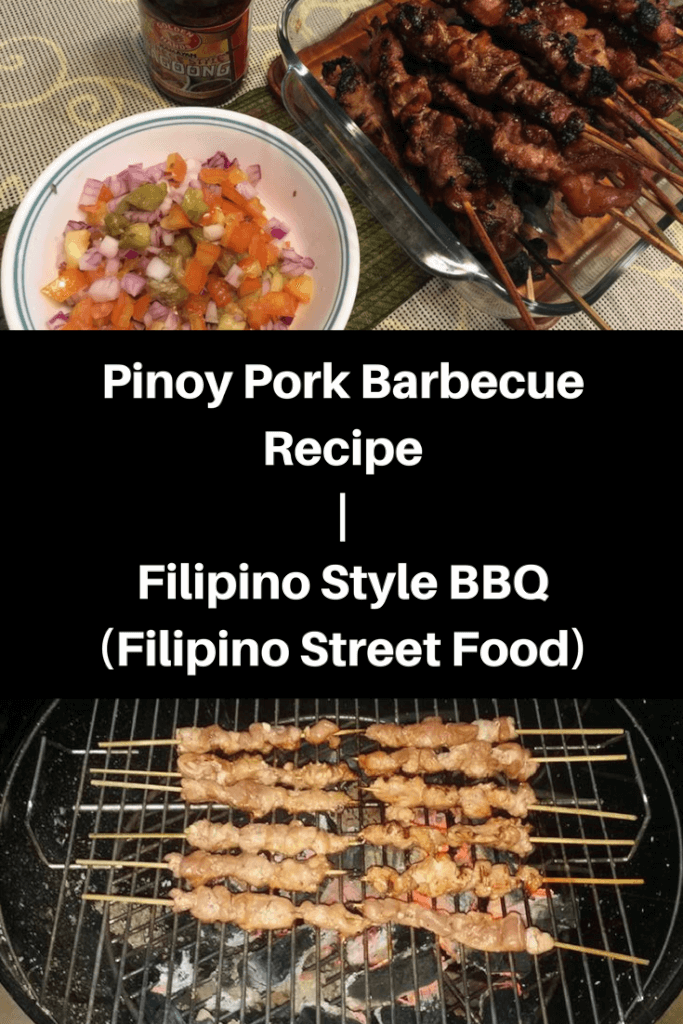
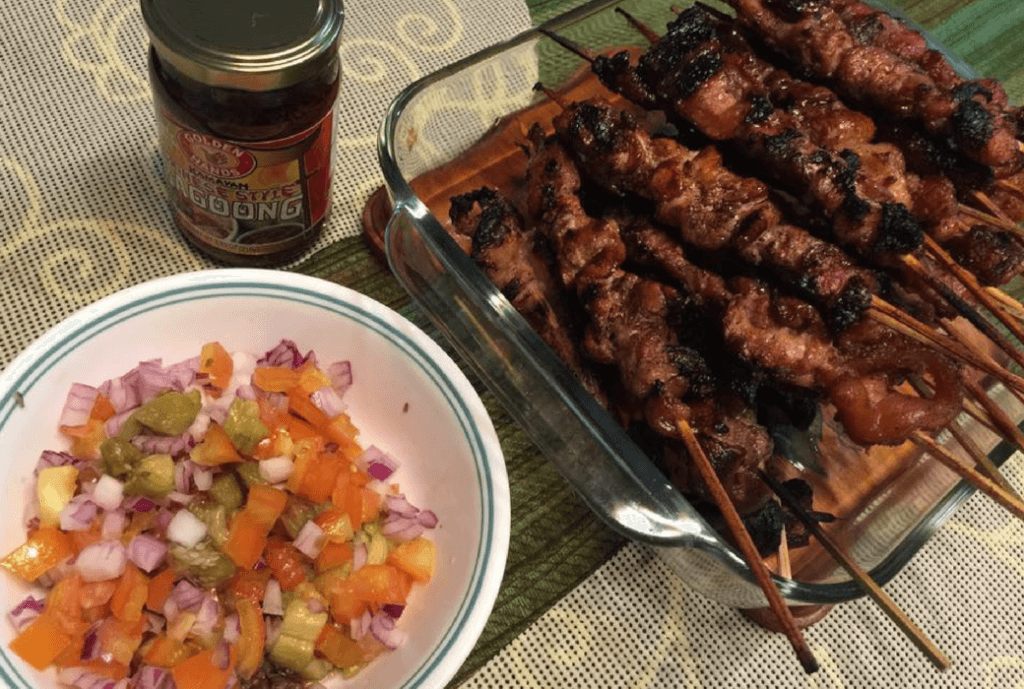
    This pinoy pork barbecue recipe is simple enough for anyone to follow.  The Filipino style BBQ is the ultimate Filipino street food.   Everywhere you go around the Philippines, for sure there is a restaurant or food stall that sells pinoy pork barbecue.

    pinoy pork barbecue

    Street food has suddenly become popular in the Philippines once again. In the past few years or so, I’ve seen a number of food parks rise up all over.  Maybe because of the change in eating habits of people today. People are busier, there is less time to cook.  Together with the lack of time, people are also looking for cheaper alternatives to eating out. Hence, the popularity of pinoy pork barbecue.

    [adinserter block=”10″]

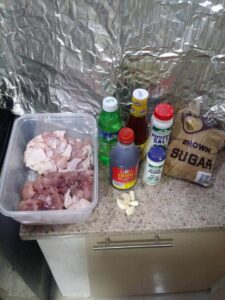
    Filipino Style Pork Barbecue are skewers of pork marinated in garlic, soy sauce, sprite (or 7-Up) and banana catsup.  Sprite (or 7-Up) acts as the meat tenderizer.  Banana catsup gives the pinoy pork barbecue its reddish color. The pork skewers are grilled until cooked and slightly charred.

    Very easy to make.  Can be eaten while on the go.  And most important, delicious!

    Did I say that they also are very good pulutan with beer?

    BTW, I served this together with the Ensaladang Talong which can be found HERE.

    pinoy pork barbecue

    Ingredients:

    • 400 g pork fillet, sliced finely into around 1 inch by 5 inches
    • 500 g pork belly, sliced finely into around1 inch by 5 inches

    Ingredients for marinade:

    Ingredients for the spiced vinegar dip:

    • 1/2 cup white vinegar
    • 2 cloves garlic, peeled and minced
    • 1/2 onion, peeled and finely chopped
    • 1 to 2 Thai chili peppers, chopped
    • 1/8 tsp freshly-ground pepper
    • 1/8 tsp salt

    Instructions:

    1. Soak 20 barbecue sticks in water for at least an hour.  This is to ensure that the sticks do not burn while grilling.
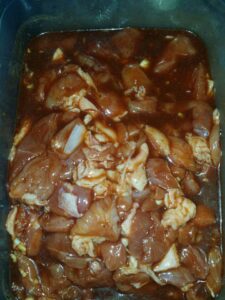
    2. Mix all the marinade ingredients and then add the strips of pork.  Marinate for a minimum of 4 hours (preferably overnight).pinoy pork barbecue
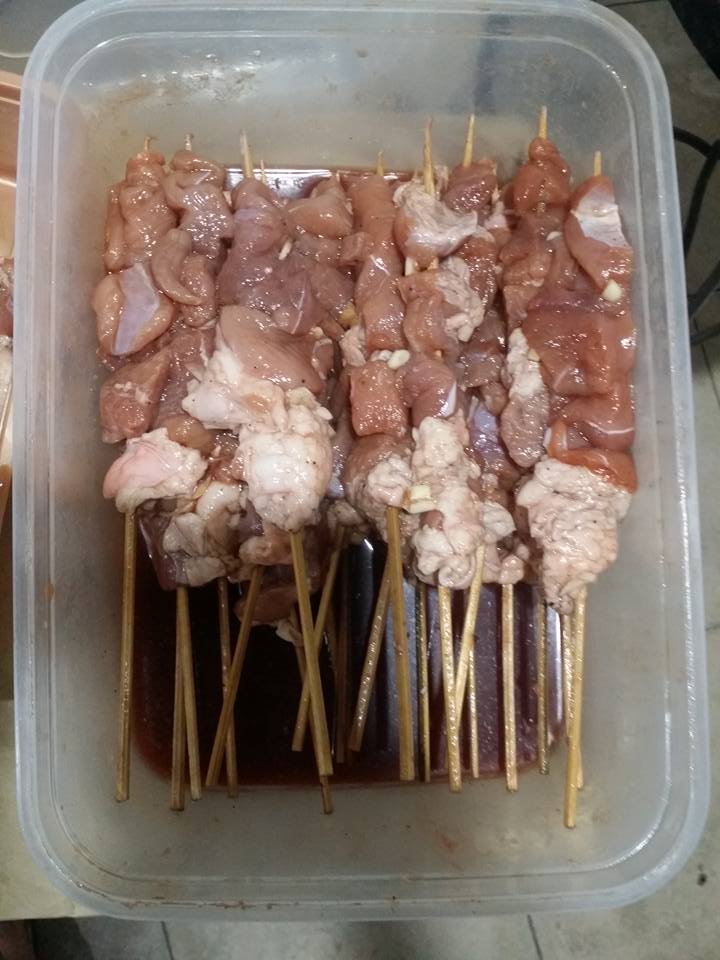
    3. Skewer the meat into the pre-soaked barbecue sticks.pinoy pork barbecue
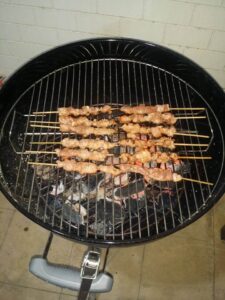
    4. Grill meat over hot coals for about 2 to 3 minutes each side, basting occasionally until the meat is thoroughly cooked.pinoy pork barbecue

    The grill I used is a Weber 741001 Original Kettle 22-Inch Charcoal Grill.  It is quite huge to grill only a few skewers of pinoy barbecue.  You need lots of charcoal to grill the barbecue.  It looks like this:


    Maybe I should get myself a Hibachi grill, it is smaller, and may be possibly used indoors.  It looks like this:

    What do you think?


    pinoy pork barbecue

    Filipino Style BBQ | Pinoy Pork Barbecue Recipe

    This pinoy pork barbecue recipe is simple enough for anyone to follow. The Filipino style BBQ is the ultimate Filipino street food. Everywhere you go around the Philippines, for sure there is a restaurant or food stall that sells pinoy pork barbecue.

    • 1/2 kilo pork fillet (sliced finely into around 1 inch by 5 inches)
    • 1/2 kilo pork belly (sliced finely into around1 inch by 5 inches)

    Marinade

    • 4 cloves garlic (sliced)
    • 2 tbsp brown sugar
    • 1/4 cup soy sauce
    • 1 cup sprite or 7-up
    • 1/4 cup banana catsup
    • salt and pepper to taste

    Spiced Vinegar Dip

    • 1/2 cup white vinegar
    • 2 cloves garlic (peeled and minced)
    • 1/2 piece onion (peeled and finely chopped)
    • 1 to 2 Thai chili peppers (chopped)
    • 1/8 tsp pepper (freshly-ground)
    • 1/8 tsp salt
    1. Soak 20 barbecue sticks in water for at least an hour. This is to ensure that the sticks do not burn while grilling.

    2. Mix all the marinade ingredients and then add the strips of pork. Marinate for a minimum of 4 hours (preferably overnight).

    3. Skewer the meat into the pre-soaked barbecue sticks.

    4. Grill meat over hot coals for about 2 to 3 minutes each side, basting occasionally until the meat is thoroughly cooked.

  • Pork Bistek

    Pork Bistek

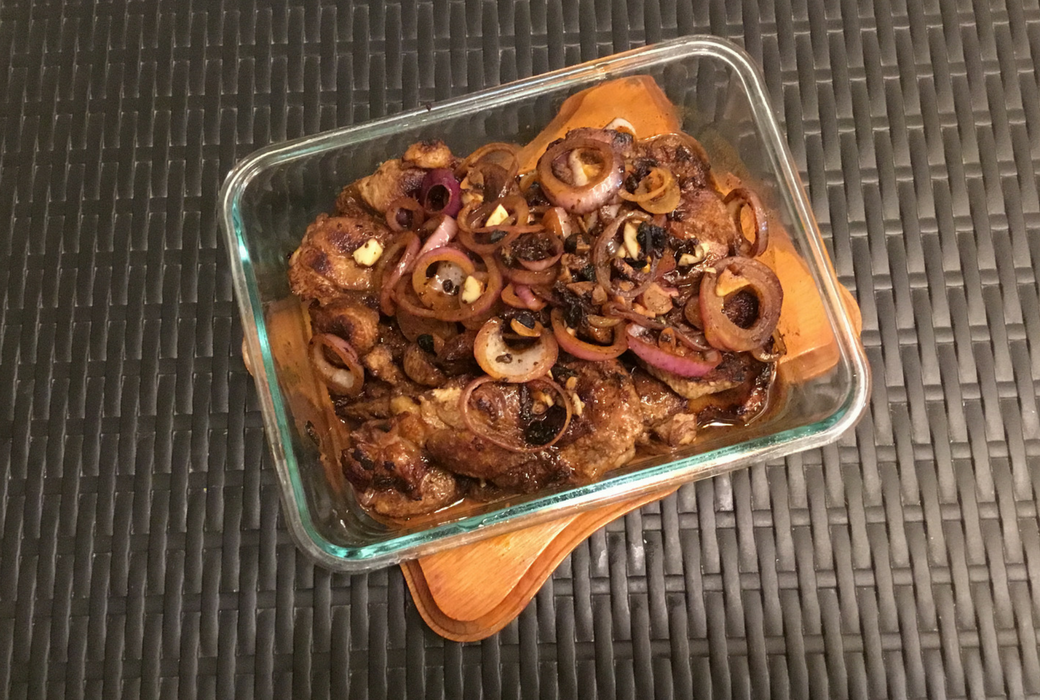
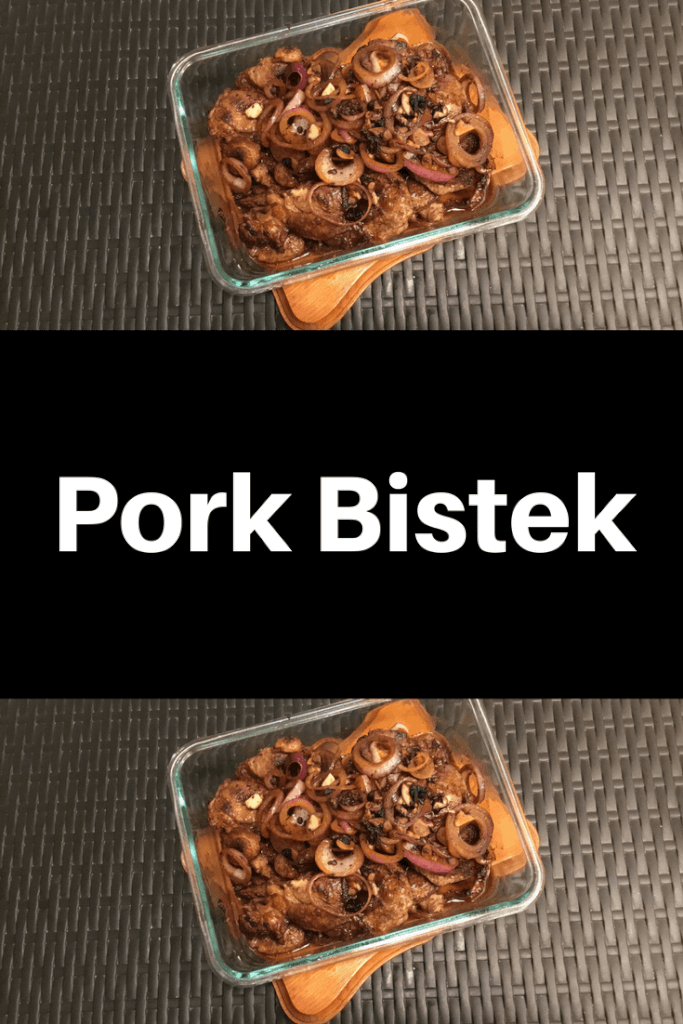
    Pork bistek or bistek tagalog is a favorite dish of Filipinos. It is very easy to cook with just a few ingredients needed. Although the traditional bistek tagalog (beef steak) uses beef, this one uses pork as an alternative.

    Below is a simple step by step instruction on how to cook Pork Bistek or Bistek Tagalog that you can try at home. Enjoy!

    Pork bistek is best served with plain steamed rice.

    [adinserter block=”10″]

    pork bistek

    Pork Bistek

    INGREDIENTS:

    • 1.5 kilos pork butt, sliced thinly or cut into 1½-inch cubes
    • ½ cup calamansi juice
    • ¼ cup soy sauce
    • 1 large onion, peeled and sliced into rings (reserve 5 to 6 rings for garnish)
    • 1 head garlic, peeled and minced
    • ¼ teaspoon pepper
    • 3 tablespoons oil
    • 1 cup water
    • salt to taste

    INSTRUCTIONS:

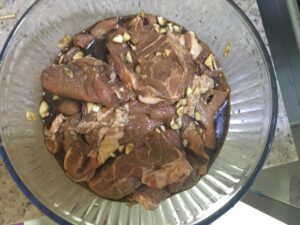
    1. In a bowl, combine pork, lemon juice, soy sauce, onions, garlic and pepper. Massage marinade into meat and marinate for about 30 minutes. Remove meat, onions and garlic from marinade, squeezing and reserving excess liquid.pork bistek
    2. In a pan over high heat, heat 2 tablespoons of the oil. Add pork and cook for about 3 to 5 minutes per side or until lightly browned. Spoon out and reserve released meat juices during frying. Remove meat.
    3. In the pan, add the remaining 1 tablespoon oil. Add onions and garlic, and cook, stirring regularly, until limp and aromatic. Return meat to pan.
    4. Add reserved marinade and meat juices. Add water and bring to a boil. Cover, lower heat and simmer for about 40 to 50 minutes or until meat is fork-tender and liquid is reduced. Season with salt to taste. Turn off heat and add the remaining onion rings. Cover and allow onion slices to cook slightly in the steam. Serve hot.

    pork bistek

    Pork Bistek

    Pork bistek or bistek tagalog is a favorite dish of Filipinos. It is very easy to cook with just a few ingredients needed. Although the traditional bistek tagalog (beef steak) uses beef, this one uses pork as an alternative.

    • 1.5 kilo pork butt (sliced thinly or cut into 1½-inch cubes)
    • ½ cup calamansi juice
    • ¼ cup soy sauce
    • 1 piece onion (large, peeled and sliced into rings (reserve 5 to 6 rings for garnish))
    • ¼ tsp pepper
    • 3 tbsp oil
    • 1 cup water
    • salt to taste
    1. In a bowl, combine pork, lemon juice, soy sauce, onions, garlic and pepper. Massage marinade into meat and marinate for about 30 minutes. Remove meat, onions and garlic from marinade, squeezing and reserving excess liquid.

    2. In a pan over high heat, heat 2 tablespoons of the oil. Add pork and cook for about 3 to 5 minutes per side or until lightly browned. Spoon out and reserve released meat juices during frying. Remove meat.

    3. In the pan, add the remaining 1 tablespoon oil. Add onions and garlic, and cook, stirring regularly, until limp and aromatic. Return meat to pan.

    4. Add reserved marinade and meat juices. Add water and bring to a boil. Cover, lower heat and simmer for about 40 to 50 minutes or until meat is fork-tender and liquid is reduced. Season with salt to taste. Turn off heat and add the remaining onion rings. Cover and allow onion slices to cook slightly in the steam. Serve hot.

  • Crispy Pata (Pork Hock) With No Frying | Oven Baked Crispy Pata

    Crispy Pata is a famous Filipino pork dish which is basically boiled pork (hock with the knuckle) and then fried until the rind is crispy while the meat remains soft and moist.

    Initially, the leg is made tender by simmering in water along with some spices.  After which, the leg is deep fried to perfection.

    crispy pata

    This dish is eaten as a main dish along with a dipping sauce of soy sauce, vinegar, garlic and chopped onions. It can also be served as finger food or “pulutan” for beer drinking sessions.  This is why crispy pata is very popular with Filipinos.

    Traditionally, when cooking crispy pata, the whole leg is deep fried.  This means that a lot of cooking oil is required.  And I mean a lot!

    As an experiment, I decided that I should use less oil (trying to be thrifty) by having the butcher slice up the pork hock into 6 pieces.

    During the preparation phase, another thought hit me!  Instead of deep frying, why not oven bake the whole thing?

    Any self respecting, pure blooded Filipino loves eating the crispy pata with all that dripping fat.  Think clogged arteries.  But it does not have to be that way all the time.

    By employing the oven instead of deep frying, I have reduced the fat that goes with this dish.  Many cooks will get angry with me by doing this.  However, it already sounds healthier by saying it is baked!  Less guilt…

    Serve the crispy pata with the dipping sauce as mentioned above together with ensaladang talong (filipino style roasted eggplant salad).  Perfect combination!

    crispy pata

    The initial step is to simmer the pork hock pieces in water with the salt, garlic, onion, peppercorns and bay leaf until tender.

    Then it is followed by baking the pork hock pieces in the oven at 475°F (246°C).

    The last step is to broil the pork hock pieces in the oven for around 5 minutes.

    Notice the burned spots?  That is the result of placing the pork hock pieces very close to the broiler burner and at the same time by getting distracted with TV, hahaha.  Don’t make the same mistake that I did!

    A turbo broiler is also a good option to use and could make the job easier.  It looks like this:

    In the Philippines, Imarflex is a popular brand when it comes to turbobroilers.  Below is a good model to have and is available at Lazada:

    turbo broiler

    Ingredients:

    • 1 pata (pork hock, sliced into 6 pieces)
    • 3 tablespoons salt
    • 1 tablespoon peppercorns
    • 1 whole garlic
    • 1 whole onion
    • 1 bay leaf

    Ingredients for the dipping sauce:

    Instructions:

    1. Pour water in a cooking pot, enough to cover the pork, then let boil.
    2. Put-in garlic, onion, bay leaf, peppercorns, and salt.
    3. Add the pig’s legs pieces in the cooking pot then simmer until the leg becomes tender (about 1 hour).crispy pata
    4. Remove the tender leg pieces from the cooking pot and set aside until the temperature goes down.
    5. Preheat oven to475°F (246°C).
    6. Bake in the oven for 30 minutes.
    7. To make the rind crispier, switch to broil mode and broil for 5 minutes or until you see the rind getting puffier and crispy looking.
    8. Turn-off the heat; remove the crispy pork leg pieces; and transfer it to a wide serving plate.
    9. Serve the crispy pata immediately with soy-vinegar sauce for dipping.
    10. Share and enjoy!

    Instructions for dipping sauce:

    Mix all ingredients and serve.

    crispy pata

    Crispy Pata (Pork Hock) With No Frying | Oven Baked Crispy Pata

    Crispy Pata is a famous Filipino pork dish which is basically boiled pork (hock with the knuckle) and then fried until the rind is crispy while the meat remains soft and moist. Initially, the leg is made tender by simmering in water along with some spices. After which, the leg is deep fried to perfection.

    • 1 piece pata (pork hock (sliced into 6 pieces)
    • 3 tbsp salt
    • 1 tbsp peppercorns
    • 1 piece garlic (whole)
    • 1 piece onion (whole)
    • 1 piece bay leaf

    Dipping Sauce

    • 1 cup vinegar
    • 1/4 cup soy sauce
    • 1 piece onion (peeled and chopped)
    • 3 cloves garlic (peeled and minced)
    • salt and pepper to taste
    1. Pour water in a cooking pot, enough to cover the pork, then let boil.

    2. Put-in garlic, onion, bay leaf, peppercorns, and salt.

    3. Add the pig’s legs pieces in the cooking pot then simmer until the leg becomes tender (about 1 hour).

    4. Remove the tender leg pieces from the cooking pot and set aside until the temperature goes down.

    5. Preheat oven to475°F (246°C).

    6. Bake in the oven for 30 minutes.

    7. To make the rind crispier, switch to broil mode and broil for 5 minutes or until you see the rind getting puffier and crispy looking.

    8. Turn-off the heat; remove the crispy pork leg pieces; and transfer it to a wide serving plate.

    9. Serve the crispy pata immediately with soy-vinegar sauce for dipping.

    10. Share and enjoy!

    Instructions for dipping sauce:

    1. Mix all ingredients and serve.

    Other recipes may be found HERE.

  • Ensaladang Talong (Filipino Style Roasted Eggplant Salad)

    Ensaladang Talong (Filipino Style Roasted Eggplant Salad) is a favorite side with roasted dishes like grilled tuna belly, grilled pork belly, pork barbecue, crispy pata and many more!

    There are not that many salad dishes in Philippine cuisine.  The ensaladang talong is a favorite because of the right balance of flavor and texture– not too sour, salty, or sweet.

    ensaladang talong

    Ensaladang talong combines the richness of roasted eggplants with a hint of sweetness from onions and tomatoes.  They are usually mixed together in a light dressing of vinegar, salt, and sugar.  This makes for a simple and easy to prepare side dish.  For this recipe, I decided to do away with the vinegar dressing and instead use Chinese bagoong (fermented shrimp paste)

    To make this, you’ll need Asian eggplants. They’re the ones that are long, skinny, and with dark or light purple skin.

    To roast the eggplants, I used a Lodge cast iron grill.  It looks like this:

    This is a less mess method and more convenient.  No need to go outside and start a grill and deal with hot charcoals.

    This is very easy to make. It takes less than 45 minutes to prepare this salad.  You can prepare it ahead and chill it in the refrigerator until ready to serve.

    Ingredients:

    • 2 large eggplants
    • 1 large tomato
    • 1 medium onion
    • Chinese Bagoong (to serve)

    Instructions:

    1. Use a fork or knife to pierce eggplants on all sides, and then place on top of grill.
    2. Grill the eggplants until skin has wrinkled and darkened. Remove from grill and set aside to cool.
    3. While grilling the eggplants, dice tomatoes and chop onions and place in a bowl.
    4. Once eggplants have cooled, peel them carefully and remove as much skin as possible.
    5. Place eggplants in the bowl together with tomatoes and onions. Toss salad and serve with Chinese Bagoong.


    ensaladang talong

    Ensaladang Talong (Filipino Style Roasted Eggplant Salad)

    Ensaladang Talong (Filipino Style Roasted Eggplant Salad) is a favorite side with roasted dishes like grilled tuna belly, grilled pork belly, pork barbecue, crispy pata and many more!

    There are not that many salad dishes in Philippine cuisine. The ensaladang talong is a favorite because of the right balance of flavor and texture– not too sour, salty, or sweet.

    • 2 pieces eggplants (large)
    • 1 piece tomato (large)
    • 1 piece onion (medium)
    • Chinese Bagoong (to serve)
    1. Use a fork or knife to pierce eggplants on all sides, and then place on top of grill.

    2. Grill the eggplants until skin has wrinkled and darkened. Remove from grill and set aside to cool.

    3. While grilling the eggplants, dice tomatoes and chop onions and place in a bowl.

    4. Once eggplants have cooled, peel them carefully and remove as much skin as possible.

    5. Place eggplants in the bowl together with tomatoes and onions. Toss salad and serve with Chinese Bagoong.

  • Easy Green Bean Recipe (with Maple Syrup)

    This easy Green Bean recipe could be a treat if you like eating green beans. These beans sautéed in butter and maple syrup are tender, sweet and delicious.

    What are green beans?  From Wikipedia:

    Green beans are the unripe, young fruit and protective pods of various cultivars of the common bean (Phaseolus vulgaris).  Immature or young pods of the runner bean (Phaseolus coccineus), yardlong bean (Vigna unguiculata subsp. sesquipedalis), and hyacinth bean (Lablab purpureus) are used in a similar way.

    Green beans are known by many common names, including French beans, string beans, snap beans, and snaps.

    They are distinguished from the many differing varieties of beans in that green beans are harvested and consumed with their enclosing pods, typically before the seeds inside have fully matured.

    This practice is analogous to the harvesting of unripened pea pods as snow peas or sugar snap peas.

    Easy Green Bean Recipe

    The photo above are of whole green beans packed for sale (photo from Wikipedia).

    What is maple syrup?  From Wikipedia:

    Maple syrup is a syrup usually made from the xylem sap of sugar maple, red maple, or black maple trees, although it can also be made from other maple species.

    In cold climates, these trees store starch in their trunks and roots before the winter; the starch is then converted to sugar that rises in the sap in late winter and early spring.

    Maple trees are tapped by drilling holes into their trunks and collecting the exuded sap, which is processed by heating to evaporate much of the water, leaving the concentrated syrup.


    This easy Green Bean recipe only takes a few minutes to prepare and is very tasty.

    Ingredients:

    • 2 cups green beans
    • 2 tablespoons butter
    • 3 tablespoons maple syrup
    • Salt and pepper

    Instructions:

    1. Steam green beans until softened.
    2. Melt the butter in a pan over medium heat.
    3. Add the maple syrup and green beans saute for a few minutes.
    4. Add salt and pepper to taste and serve.

    Easy Green Bean Recipe

    Easy Green Bean Recipe (with Maple Syrup)

    This easy Green Bean recipe could be a treat if you like eating green beans. These beans sautéed in butter and maple syrup are tender, sweet and delicious.

    • 2 cups green beans
    • 2 tbsps butter
    • 3 tbsps maple syrup
    • Salt and pepper
    1. Steam green beans until softened.

    2. Melt the butter in a pan over medium heat.

    3. Add the maple syrup and green beans saute for a few minutes.

    4. Add salt and pepper to taste and serve.

    Check out the other recipes HERE.

  • Oven-Baked Summer Squash Fries

    This Oven-Baked Summer Squash Fries is very easy to do.

    A summer squash has a strong resemblance, in flavor and texture, to a zucchini. You can, in fact, substitute zucchini in this recipe, but it will probably bake a bit more quickly.

    There are many variants of summer squashes.  What are they?

    What is a summer squash?  From Wikipedia:

    Summer squash are squashes that are harvested when immature, while the rind is still tender and edible. Nearly all summer squashes are varieties of Cucurbita pepo, though not all Cucurbita pepo are considered summer squashes. Most summer squash have a bushy growth habit, unlike the rambling vines of many winter squashes.  The name “summer squash” refers to the short storage life of these squashes, unlike that of winter squashes.

    Summer squashes include:

    Cousa squash, pale-colored zucchini varieties purportedly of Middle Eastern or West Asian descent. Not to be confused with cushaw, a type of winter squash.
    Pattypan squash (scallop squash)
    Tromboncino or zucchetta, unusual among summer squash as being a vining plant and a Cucurbita moschata variety.
    Crookneck squash
    Straightneck squash
    Zucchini (courgette)
    Immature ridge gourd luffa is used as a summer squash in India, where it is known as turai or dodka.
    Aehobak (Korean zucchini) belongs to the species Cucurbita moschata.

    summer Squash fries
    Photo from Wikipedia

    Ingredients:

    Instructions:

    1. Preheat oven to 400°F (200°C). Grease a large baking sheet with olive oil and set aside.
    2. Cut your summer squash into wedges. Remove the seeds if they are quite large and set wedges aside.
    3. Whisk the eggs in a dish and set aside.
    4. In another dish, combine the bread crumbs, paprika, mustard powder and salt and pepper.
    5. Start by dipping the wedges, one by one, into the egg mixture and then the bread crumb mixture. Place each wedge on the greased baking sheet. Continue until all the wedges are done.
    6. You can bake the wedges as is for about 30-40 minutes (until soft inside and golden brown on the outside), but if you want a more golden texture, drizzle or spray some olive oil on top of the wedges. Flip half way through baking.
    7. Serve with ranch or another favorite dip.

    Go try this Oven-Baked Summer Squash Fries recipe!

    summer squash fries

    Oven-Baked Summer Squash Fries

    This Oven-Baked Summer Squash Fries is very easy to do.  A summer squash has a strong resemblance, in flavor and texture, to a zucchini. You can, in fact, substitute zucchini in this recipe, but it will probably bake a bit more quickly.

    • 1 piece summer squash (medium)
    • 2 pieces eggs
    • 1 1/2 cups breadcrumbs (try panko breadcrumbs for a crunchier texture)
    • 1 tsp paprika
    • 1 tsp mustard power
    • Salt and pepper
    • Olive oil
    1. Preheat oven to 400°F (200°C). Grease a large baking sheet with olive oil and set aside.

    2. Cut your summer squash into wedges. Remove the seeds if they are quite large and set wedges aside.

    3. Whisk the eggs in a dish and set aside.

    4. In another dish, combine the bread crumbs, paprika, mustard powder and salt and pepper.

    5. Start by dipping the wedges, one by one, into the egg mixture and then the bread crumb mixture. Place each wedge on the greased baking sheet. Continue until all the wedges are done.

    6. You can bake the wedges as is for about 30-40 minutes (until soft inside and golden brown on the outside), but if you want a more golden texture, drizzle or spray some olive oil on top of the wedges. Flip half way through baking.

    7. Serve with ranch or another favorite dip.

    Check out the other recipes HERE.

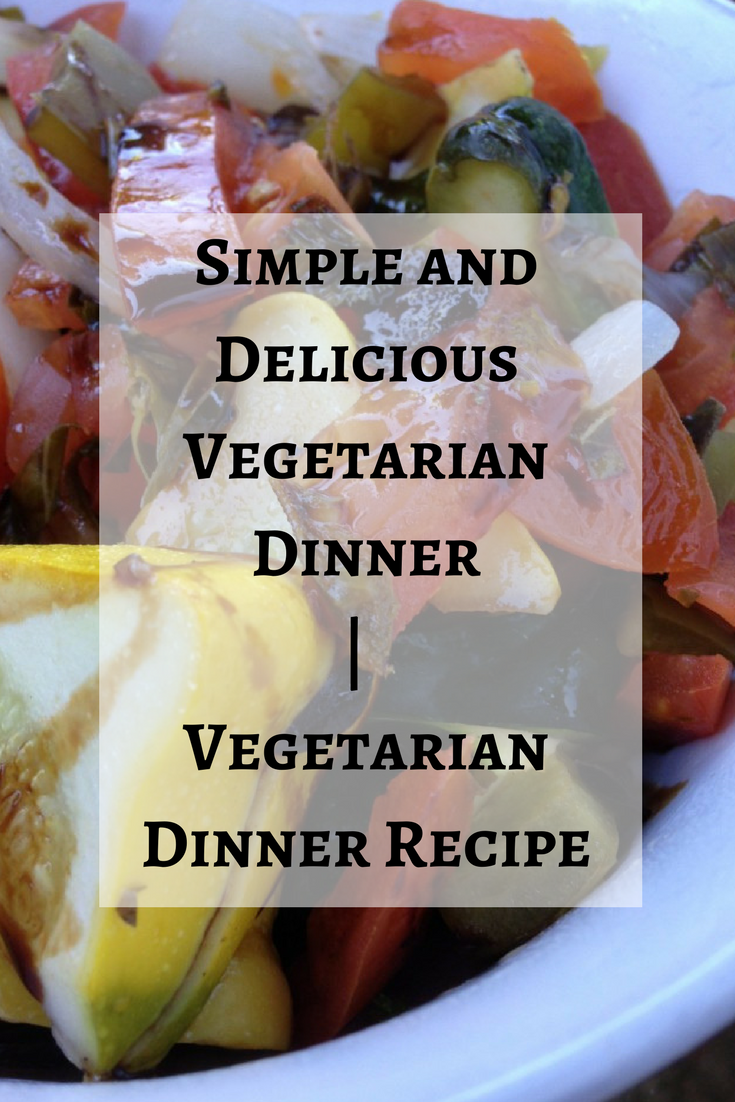
  • Simple and Delicious Vegetarian Dinner

    Simple and Delicious Vegetarian Dinner

    If you’re looking for a meatless meal that satisfies, look no further. This simple and delicious vegetarian dinner isn’t exactly a recipe, but is meant to inspire you for your next veggie-only dish.

    vegetarian dinner

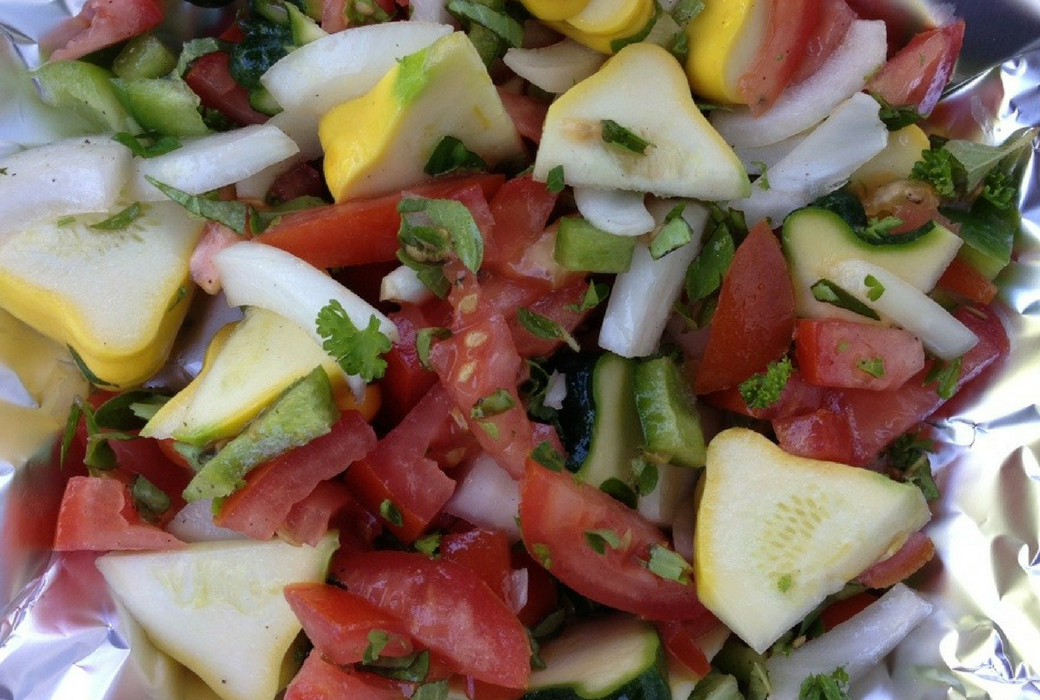
    All you do is preheat your oven to 350°F (177°C). Then chop up some veggies, herbs and toss them in some olive oil. In the  photo above, we have pattypans, peppers, onions and tomatoes.

    Pattypans?  From Wikipedia:

    Pattypan squash (or ‘patty pan’) is a variety of summer squash (Cucurbita pepo) notable for its small size, round and shallow shape, and scalloped edges, somewhat resembling a small toy top, or flying saucer. The name “pattypan” derives from “a pan for baking a patty”. Its French name, pâtisson, derives from a Provençal word for a cake made in a scalloped mould. The pattypan squash is also known as scallop squash, peter pan squash, sunburst squash, granny squash, custard marrow, custard squash, ciblème in Cajun French, white squash, button squash, scallopini, or simply “squash” in Australian English, or schwoughksie squash (pronounced “shwooxie squash”), especially if grown in the Poughkeepsie, New York, area.

    Patty pan squash comes in yellow, green, and white varieties.  The squash is most tender when relatively immature; it is generally served when it is no more than two to three inches in diameter. In fine cuisine, its tender flesh is sometimes scooped out and mixed with flavorings, such as garlic, prior to reinsertion; the scooped-out husk of a patty pan also is sometimes used as a decorative container for other foods. Pattypan is a good source of magnesium, niacin, and vitamins A and C.  One cup contains approximately 20 to 30 calories and no fat. It is often sliced, baked, or coated and fried until golden brown, or simply boiled. In Polish cuisine, they are pickled in sweet vinegar.

    They can be stored in a fridge for up to 3 days.

    You don’t exactly need pattypans for this vegetarian dish.  Almost any variant from the squash family will do.  Zucchini is a good alternative.  Add some fresh herbs like basil, parsley and oregano or whatever you like. Mushrooms, eggplant, garlic and plenty of other veggies also work well.

    Mix all your ingredients and wrap everything in foil on a baking dish. Bake at 350°F (177°C) for about 40 minutes or so. Drizzle with your favorite balsamic reduction and serve over rice, quinoa or just have it by itself.

    Voila!  You now have a simple and delicious vegetarian dinner!

    vegetarian dinner

    Other recipes are HERE.

  • Easy Fried Rice Recipe | Bacon and Hotdog Fried Rice

    Here is an easy fried rice recipe.  Most of the stuff you will be needing to cook this recipe is in your freezer and your pantry.

    One day wife was away on a trip and I needed to do the cooking.  Unfortunately, I was too lazy to cook and decided to just fry some meat for dinner.  As I was checking what was on the fridge, I saw we had lots of left-over rice.  The rice was a good candidate for this easy fried rice recipe.  I checked the freezer and we had Purefood hotdogs and a packet of Purefoods Bacon Crumble.  This gave me an idea.

    From the Purefoods website:

    Purefoods Bacon Crumble

    Is a select combination of honey-flavored sweetness and pleasingly salty crispness. From thin bits and ends of premium pork belly, specially trimmed with the right proportion of pink pork meat and prok fat, and fully smoked.

    Tender Juicy Classic

    Made from quality ingredients making the hotdog very tender and irresistably juicy.

    We also had a packet of frozen mixed vegetables in the freezer.  Perfect!  In the pantry, I found eggs.  I am good to go!

    Instead of plain bland fried meat for dinner, I was able to serve something special with this easy fried rice.

    Ingredients:

    • 4 cups cooked rice
    • 5 pieces hotdog, sliced
    • 1/2 cup Purefoods Bacon crumble
    • 1/2 cup frozen mixed vegetables
    • 2 eggs
    • 1 tbsp. cooking oil
    • salt and pepper

    Instructions:

    1. Heat oil in a wok or deep frying pan.
    2. Add the bacon crumble and cook until fat is rendered.
    3. Add the hotdogs and let cook.
    4. Add the frozen vegetables.  Mix well.
    5. Add the rice and mix thoroughly.
    6. Season with salt and pepper.
    7. Crack the eggs and pour on the rice mixture.  I find that pre-scrambling them is an unnecessary step. They get scrambled just fine when you mix them into the rice.
    8. Serve and enjoy!

    easy fried rice recipe

    Easy Fried Rice Recipe | Bacon and Hotdog Fried Rice

    Here is an easy fried rice recipe. Most of the stuff you will be needing to cook this recipe is in your freezer and your pantry.

    • 4 cups cooked rice
    • 5 pieces hotdog (sliced)
    • 1/2 cup Purefoods Bacon crumble
    • 1/2 cup frozen mixed vegetables
    • 2 pieces eggs
    • 1 tbsp cooking oil
    • salt and pepper (to taste)
    1. Heat oil in a wok or deep frying pan.

    2. Add the bacon crumble and cook until fat is rendered.

    3. Add the hotdogs and let cook.

    4. Add the frozen vegetables. Mix well.

    5. Add the rice and mix thoroughly.

    6. Season with salt and pepper.

    7. Crack the eggs and pour on the rice mixture. I find that pre-scrambling them is an unnecessary step. They get scrambled just fine when you mix them into the rice.

    8. Serve and enjoy!

    Another rice recipe is HERE.


  • Kare-kare Recipe | Quick and Easy Kare-kare

    One day while at the grocery store, I was thinking on what to cook for lunch.  While walking through the aisles, I spotted this Mama Sita’s Kare-kare sauce:
    I figured that this appears to be interesting as it is already a ready-made sauce as compared to the normal Mama Sita’s Kare-kare mix which is in powdered form.  This was worth a try.

    What is good with this is you can have a special dish on an ordinary day.

    What is Kare-kare?

    Kare-kare is a Filipino stew complemented by a thick peanut sauce. It is normally made of meat such as oxtail, pork hocks, calf feet, pork legs, veal and occasionally offal. Kare-kare can also be prepared with seafood (prawns, squid and mussels) or vegetables. Vegetables, which include eggplant, Chinese cabbage, green beans and okra are added, usually equal to or greater than the amount of meats. The stew is seasoned with toasted peanuts or peanut butter, onions and garlic. It is colored with annatto and can be thickened with toasted or plain ground rice.

    It is often eaten with bagoong (shrimp paste), sometimes seasoned with chili.  Traditionally, it is considered a fiesta (feast) dish and normally is on the menu of Filipino restaurants.

    According to the packaging, you will need 500g of meat for every 120g pouch.  The recipe in the packaging calls for oxtail meat but I decided to use pork shoulder instead.  I just doubled the recipe ingredients to feed everyone at home.

    kare-kare

    Ingredients:

    • 1 kilo pork shoulder, cut into serving pieces
    • 2 pouches Mama Sita’s Kare-kare sauce (120g/pouch)
    • 200g Sitaw (long green beans), cut into 2″ lengths
    • 200g Eggplant, cut diagonally about 1/4″ thick, pan fried (approx. 4 pcs)
    • 200g Pechay (bok choy), sliced

    Instructions:

    1. Boil pork shoulder in water and simmer until tender, leaving about 4 cups (1L) of broth.
    2. Stir in the Mama SIta’s Kare-kare sauce and mix well.
    3. Add in the sitaw and cook for 5 minutes.
    4. Add the other vegetables and cook for a minute or until all the vegetables are done.
    5. Serve with bagoong and rice.


    kare-kare

    Kare-kare

    Kare-kare is a Filipino stew complemented by a thick peanut sauce. It is normally made of meat such as oxtail, pork hocks, calf feet, pork legs, veal and occasionally offal. Kare-kare can also be prepared with seafood (prawns, squid and mussels) or vegetables. Vegetables, which include eggplant, Chinese cabbage, green beans and okra are added, usually equal to or greater than the amount of meats. The stew is seasoned with toasted peanuts or peanut butter, onions and garlic. It is colored with annatto and can be thickened with toasted or plain ground rice.

    It is often eaten with bagoong (shrimp paste), sometimes seasoned with chili. Traditionally, it is considered a fiesta (feast) dish and normally is on the menu of Filipino restaurants.

    • 1 kilo pork shoulder (kasim) (cut into serving pieces)
    • 2 pouches Mama Sita’s Kare-kare sauce (120g/pouch)
    • 200 grams Sitaw (long green beans) (cut into 2″ lengths)
    • 200 grams Eggplant (cut diagonally about 1/4″ thick, pan fried (approx. 4 pcs))
    • 200 grams Pechay (bok choy) (sliced)
    1. Boil pork shoulder in water and simmer until tender, leaving about 4 cups (1L) of broth.

    2. Stir in the Mama SIta’s Kare-kare sauce and mix well.

    3. Add in the sitaw and cook for 5 minutes.

    4. Add the other vegetables and cook for a minute or until all the vegetables are done.

    5. Serve with bagoong and rice.