This Oven-Baked Summer Squash Fries is very easy to do.
A summer squash has a strong resemblance, in flavor and texture, to a zucchini. You can, in fact, substitute zucchini in this recipe, but it will probably bake a bit more quickly.
There are many variants of summer squashes. What are they?
Summer squash are squashes that are harvested when immature, while the rind is still tender and edible. Nearly all summer squashes are varieties of Cucurbita pepo, though not all Cucurbita pepo are considered summer squashes. Most summer squash have a bushy growth habit, unlike the rambling vines of many winter squashes. The name “summer squash” refers to the short storage life of these squashes, unlike that of winter squashes.
Summer squashes include:
Cousa squash, pale-colored zucchini varieties purportedly of Middle Eastern or West Asian descent. Not to be confused with cushaw, a type of winter squash.
Pattypan squash (scallop squash)
Tromboncino or zucchetta, unusual among summer squash as being a vining plant and a Cucurbita moschata variety.
Crookneck squash
Straightneck squash
Zucchini (courgette)
Immature ridge gourd luffa is used as a summer squash in India, where it is known as turai or dodka.
Aehobak (Korean zucchini) belongs to the species Cucurbita moschata.
Photo from Wikipedia
Ingredients:
1 medium summer squash
2 eggs
1 ½ cups breadcrumbs (try panko breadcrumbs for a crunchier texture)
Preheat oven to 400°F (200°C). Grease a large baking sheet with olive oil and set aside.
Cut your summer squash into wedges. Remove the seeds if they are quite large and set wedges aside.
Whisk the eggs in a dish and set aside.
In another dish, combine the bread crumbs, paprika, mustard powder and salt and pepper.
Start by dipping the wedges, one by one, into the egg mixture and then the bread crumb mixture. Place each wedge on the greased baking sheet. Continue until all the wedges are done.
You can bake the wedges as is for about 30-40 minutes (until soft inside and golden brown on the outside), but if you want a more golden texture, drizzle or spray some olive oil on top of the wedges. Flip half way through baking.
Serve with ranch or another favorite dip.
Go try this Oven-Baked Summer Squash Fries recipe!
Oven-Baked Summer Squash Fries
This Oven-Baked Summer Squash Fries is very easy to do. A summer squash has a strong resemblance, in flavor and texture, to a zucchini. You can, in fact, substitute zucchini in this recipe, but it will probably bake a bit more quickly.
1 piece summer squash (medium)
2 pieces eggs
1 1/2 cups breadcrumbs (try panko breadcrumbs for a crunchier texture)
1 tsp paprika
1 tsp mustard power
Salt and pepper
Olive oil
Preheat oven to 400°F (200°C). Grease a large baking sheet with olive oil and set aside.
Cut your summer squash into wedges. Remove the seeds if they are quite large and set wedges aside.
Whisk the eggs in a dish and set aside.
In another dish, combine the bread crumbs, paprika, mustard powder and salt and pepper.
Start by dipping the wedges, one by one, into the egg mixture and then the bread crumb mixture. Place each wedge on the greased baking sheet. Continue until all the wedges are done.
You can bake the wedges as is for about 30-40 minutes (until soft inside and golden brown on the outside), but if you want a more golden texture, drizzle or spray some olive oil on top of the wedges. Flip half way through baking.
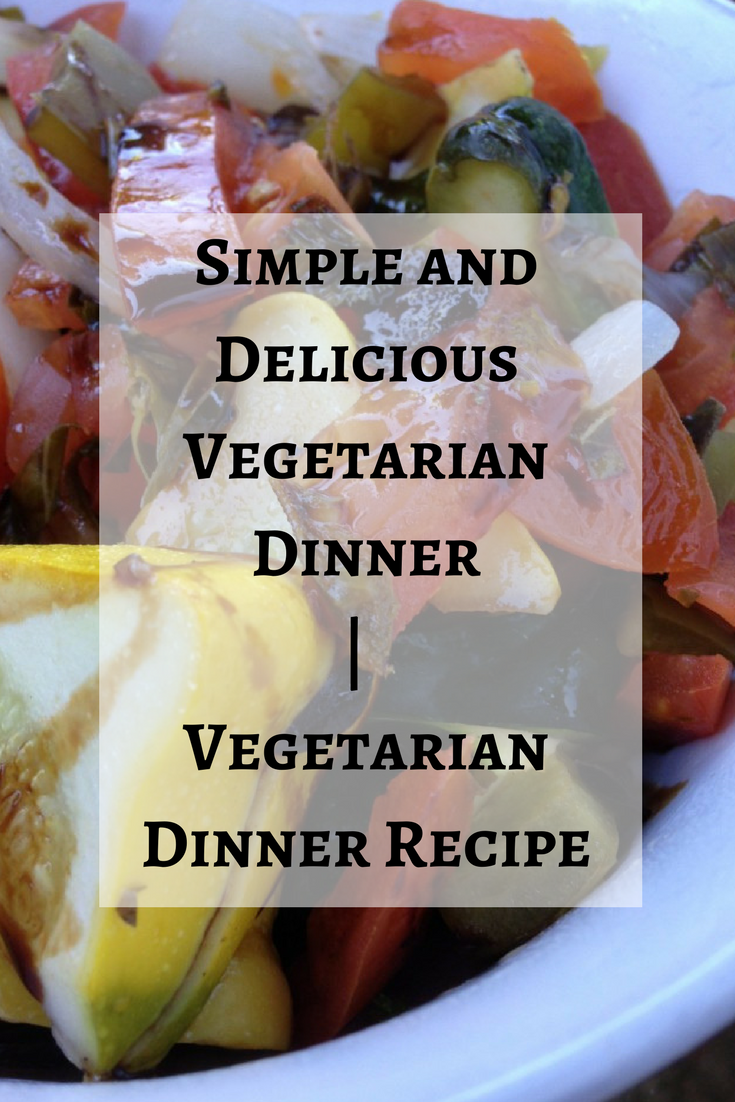
If you’re looking for a meatless meal that satisfies, look no further. This simple and delicious vegetarian dinner isn’t exactly a recipe, but is meant to inspire you for your next veggie-only dish.
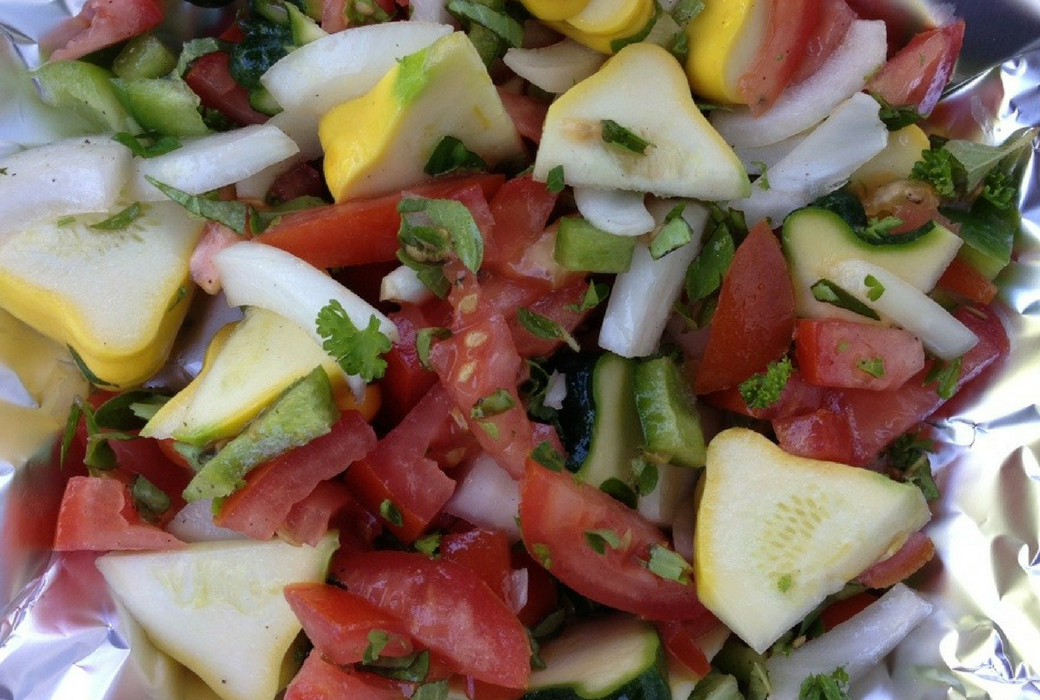
All you do is preheat your oven to 350°F (177°C). Then chop up some veggies, herbs and toss them in some olive oil. In the photo above, we have pattypans, peppers, onions and tomatoes.
Pattypan squash (or ‘patty pan’) is a variety of summer squash (Cucurbita pepo) notable for its small size, round and shallow shape, and scalloped edges, somewhat resembling a small toy top, or flying saucer. The name “pattypan” derives from “a pan for baking a patty”. Its French name, pâtisson, derives from a Provençal word for a cake made in a scalloped mould. The pattypan squash is also known as scallop squash, peter pan squash, sunburst squash, granny squash, custard marrow, custard squash, ciblème in Cajun French, white squash, button squash, scallopini, or simply “squash” in Australian English, or schwoughksie squash (pronounced “shwooxie squash”), especially if grown in the Poughkeepsie, New York, area.
Patty pan squash comes in yellow, green, and white varieties. The squash is most tender when relatively immature; it is generally served when it is no more than two to three inches in diameter. In fine cuisine, its tender flesh is sometimes scooped out and mixed with flavorings, such as garlic, prior to reinsertion; the scooped-out husk of a patty pan also is sometimes used as a decorative container for other foods. Pattypan is a good source of magnesium, niacin, and vitamins A and C. One cup contains approximately 20 to 30 calories and no fat. It is often sliced, baked, or coated and fried until golden brown, or simply boiled. In Polish cuisine, they are pickled in sweet vinegar.
They can be stored in a fridge for up to 3 days.
You don’t exactly need pattypans for this vegetarian dish. Almost any variant from the squash family will do. Zucchini is a good alternative. Add some fresh herbs like basil, parsley and oregano or whatever you like. Mushrooms, eggplant, garlic and plenty of other veggies also work well.
Mix all your ingredients and wrap everything in foil on a baking dish. Bake at 350°F (177°C) for about 40 minutes or so. Drizzle with your favorite balsamic reduction and serve over rice, quinoa or just have it by itself.
Voila! You now have a simple and delicious vegetarian dinner!
Grilled fennel is an excellent side dish. It goes well with steaks, chicken, fish and pork roast. Fennel has a slight licorice/anise flavor. Give this grilled version a try.
Fennel (Foeniculum vulgare) is a flowering plant species in the carrot family. It is a hardy, perennial herb with yellow flowers and feathery leaves. It is indigenous to the shores of the Mediterranean but has become widely naturalized in many parts of the world, especially on dry soils near the sea-coast and on riverbanks.
It is a highly aromatic and flavorful herb with culinary and medicinal uses and, along with the similar-tasting anise, is one of the primary ingredients of absinthe. Florence fennel or finocchio is a selection with a swollen, bulb-like stem base that is used as a vegetable.
Fennel is used as a food plant by the larvae of some Lepidoptera species including in its native range the mouse moth and the Old-World swallowtail. Where it has been introduced in North America it may be used by the anise swallowtail.
Fennel has a very distinct licorice flavor and when it’s grilled becomes a tender, melt-in-your-mouth experience you don’t want to miss.
A 100-gram portion of fennel seeds provides 1,440 kilojoules (345 kilocalories) of food energy, and it is a rich source (more than 19% of the Daily Value, DV) of protein, dietary fiber, B vitamins and several dietary minerals, especially calcium, iron, magnesium and manganese, all of which exceed 100% DV (table). Fennel seeds are 52% carbohydrates, 15% fat, 40% dietary fiber, 16% protein and 9% water (table).
Trim the tops off the fennel. The stringy parts can be used as an herb in your cooking, but aren’t needed for this recipe. You can even use the stalks in place of celery in some recipes, but realize they’ll have a much stronger flavor than celery.
Trim the bottom of the bulb and then cut the remaining bulb lengthwise into quarters. Rub with olive oil, salt and pepper.
Place on grill at medium heat to sear the fennel. Move to indirect heat, with the cut side up, and cook covered for about 45 minutes or until fennel is very soft. You can tell when it’s done by texture, rather than time. You definitely want to make sure it’s tender.
Simple Grilled Fennel
Grilled fennel is an excellent side dish. It goes well with steaks, chicken, fish and pork roast. Fennel has a slight licorice/anise flavor. Give this grilled version a try.
Fennel
Olive oil
Salt
Pepper
Trim the tops off the fennel. The stringy parts can be used as an herb in your cooking, but aren’t needed for this recipe. You can even use the stalks in place of celery in some recipes, but realize they’ll have a much stronger flavor than celery.
Trim the bottom of the bulb and then cut the remaining bulb lengthwise into quarters. Rub with olive oil, salt and pepper.
Place on grill at medium heat to sear the fennel. Move to indirect heat, with the cut side up, and cook covered for about 45 minutes or until fennel is very soft. You can tell when it’s done by texture, rather than time. You definitely want to make sure it’s tender.