Tag: vegetables

  • Beef Tapa Banh Mi

    What is Banh Mi?

    From Wikipedia:

    Bánh mì or banh mi refers to a kind of sandwich that consists of a Vietnamese single-serving baguette. This baguette is also called banh mi in Vietnamese. Split lengthwise, various savory ingredients fill the baguette.

    A typical Vietnamese sandwich is a fusion of meats and vegetables from native Vietnamese cuisine such as chả lụa (pork sausage), coriander, cucumber, and pickled carrots and daikon combined with condiments from French cuisine such as pâté along with jalapeño and mayonnaise.  However, there is a wide variety of popular fillings, from xíu mại to ice cream. In Vietnam, sandwiches are typically eaten for breakfast or as a snack; they are considered too dry for lunch or dinner.

    The baguette was introduced to Vietnam in the mid–19th century, when Vietnam was part of French Indochina, and became a staple food by the early 20th century. During the 1950s, a distinctly Vietnamese sandwich developed in Saigon, becoming a popular street food. Following the Vietnam War, overseas Vietnamese popularized the banh mi sandwich in countries like the United States.

    Banh Mi in Vietnam

    In Vietnamese, the word banh mi is derived from bánh (which can refer to many kinds of food, including bread) and mì (wheat). It may also be spelled bánh mỳ in northern Vietnam. Taken alone, banh mi means “bread” but is understood to be the Vietnamese baguette. Via synecdoche, it may also refer to a sandwich, with the term banh mi kẹp being used to disambiguate. In particular, banh mi often refers to the sandwiches made on Vietnamese baguettes, which may be called bánh mì Sài Gòn, after the city in which they were popularized. However, even in Vietnam, “a bánh mì for breakfast” implies a meat-filled sandwich for breakfast, not just bread.

    A folk etymology claims that the word bánh mì is a corruption of the French pain de mie, meaning soft, white bread.  However, bánh or its Nôm form 餅 has referred to rice cakes and other pastries since as early as the 13th century, centuries before French contact.

    [adinserter block=”10″]


    banh mi

    This banh mi sandwich recipe is a little bit different from the traditional banh mi recipe as we are going to use beef tapa as our meat.  Think this way, Vietnamese cuisine in fusion with Filipino cuisine. Beef tapa is often served tapsilog style (tapa, fried rice and fried egg).  This recipe shows us a different way to serve beef tapa.  We need to cook the beef tapa in advance prior to preparing this sandwich.  Check out the beef tapa recipe HERE.

    Ingredients:

    • 500 grams cooked beef tapa (recipe is HERE)
    • Baguette (or any similar bread)
    • Pickles
    • Soy Dressing

    Pickles Ingredients:

    • 1 pc small Carrot, finely julienned
    • 1 pc small White Radish, finely julienned
    • 8 tbsp White Sugar
    • 1 cup Cane Vinegar
    • 1 pc Red Chili, chopped

    Soy Dressing Ingredients:

    Instructions:

    1.  Cook the beef tapa as in the recipe found HERE.

    2.  Prepare the pickles:

    • In a bowl, mix the cane vinegar, white sugar, and red chili until the sugar is dissolved
    • Add the carrots and radish
    • Chill for an hour or more

    3.  Prepare the soy dressing:

    • Combine mayonnaise, liquid seasoning, onions, bird’s eye chili, and garlic in a mixing bowl
    • Chill for at least an hour

    4.  Assemble the sandwich:

    • Slice the bread in the middle, lengthwise
    • Lightly-toast the bread
    • Line the insides of the toasted bread with soy dressing
    • Add and distribute evenly the cooked beef tapa
    • Top the tapa with the pickles

    5.  Serve with potato chips

    banh mi

    Beef Tapa Banh Mi

    This banh mi sandwich recipe is a little bit different from the traditional banh mi recipe as we are going to use beef tapa as our meat. Think this way, Vietnamese cuisine in fusion with Filipino cuisine. Beef tapa is often served tapsilog style (tapa, fried rice and fried egg). This recipe shows us a different way to serve beef tapa. We need to cook the beef tapa in advance prior to preparing this sandwich.

    • 500 grams cooked beef tapa
    • Baguette (or any similar bread)
    • Pickles
    • Soy Dressing

    Pickles

    • 1 pc Carrot (small, finely julienned)
    • 1 pc White Radish (small, finely julienned)
    • 1 cup Cane Vinegar
    • 8 tbsp White Sugar
    • 1 pc Red Chili (chopped)

    Soy Dressing

    • 2 pcs Red Onions (small, sliced)
    • 1 pc Bird’s Eye Chili (to taste, chopped)
    • 3 tbsp Knorr Liquid Seasoning
    • 1 cup Lady’s Choice Real Mayonnaise

    Cook the beef tapa.

    Prepare the pickles:

    1. In a bowl, mix the cane vinegar, white sugar, and red chili until the sugar is dissolved

    2. Add the carrots and radish
    3. Chill for an hour or more

    Prepare the soy dressing:

    1. Combine mayonnaise, liquid seasoning, onions, bird’s eye chili, and garlic in a mixing bowl

    2. Chill for at least an hour

    Assemble the sandwich:

    1. Slice the bread in the middle, lengthwise

    2. Lightly-toast the bread

    3. Line the insides of the toasted bread with soy dressing
    4. Add and distribute evenly the cooked beef tapa
    5. Top the tapa with the pickles

    Serve with potato chips

    Other recipes may be found HERE

    This recipe also appears at So Yummy! So Easy!

  • Fried Okra | Fried Okra with Green Sambal

    Fried Okra | Fried Okra with Green Sambal

    This recipe for fried okra is easy to prepare but packs a lot of flavor.

    From one of the recipes in this blog:

    Okra, also known in English speaking countries as  Lady’s Finger or Gumbo, is always used in common Filipino vegetable dishes and every vegetable stall in the markets should always have this. The health benefits of okra include:

    its ability to lower total cholesterol levels
    improve digestive health
    improve vision
    boost skin health
    protect infant health
    prevent certain cancers
    strengthen bones
    improve cardiovascular health
    aid the immune system
    lower blood pressure
    protect heart health

    Aside from the fried okra, this recipe also comes with green sambal.  Green sambal is a spicy Southeast Asian sauce made with chili peppers.  The sambal ingredients used are green chilies (green peppers such as Anaheim (mild) or jalapeno (spicier)), garlic, shallots and olive oil. Since I am from the Philippines, instead of Anaheim Chilies, I used a combination of siling haba and green bell pepper.  WARNING:  This could get spicy!!!

    [adinserter block=”10″]

    You could also buy Green Sambal if you wish:

    For frying, I like to use cast iron skillets because they offer superior heat retention and even cooking.  Cast Iron Skillets look like this:

    Ingredients:

    • 2 bundles okra
    • Olive oil
    • 4 siling haba
    • 2 small green bell pepper
    • 3 green bird’s eye chilies (siling labuyo)
    • 1 garlic clove, minced
    • 10 shallots
    • salt to taste

    Instructions:

    1. Heat olive oil over high heat, and fry the okra (lady fingers) briefly until they are bright green in color, but still crisp. Remove the okra from the pan and set aside.
    2. Add the peppers, green bird’s eye chilies, garlic, shallots, salt and enough olive oil to a blender. Blend until nearly smooth.
    3. Reheat the oil in the pan, and sauté the blended paste.
    4. Serve the green sambal with the fried okra.

    Fried Okra | Fried Okra with Green Sambal

    This recipe for fried okra is easy to prepare but packs a lot of flavor.  Aside from the fried okra, this recipe also comes with green sambal. Green sambal is a spicy Southeast Asian sauce made with chili peppers.

    • 2 bundles okra
    • Olive oil (for frying)
    • 4 pcs siling haba
    • 2 pcs green bell peppers (small)
    • 3 pcs green bird’s eye chilies (siling labuyo)
    • 1 clove garlic (minced)
    • 10 pcs shallots
    • salt to taste
    1. Heat olive oil over high heat, and fry the okra (lady fingers) briefly until they are bright green in color, but still crisp. Remove the okra from the pan and set aside.

    2. Add the peppers, green bird’s eye chilies, garlic, shallots, salt and enough olive oil to a blender. Blend until nearly smooth.

    3. Reheat the oil in the pan, and sauté the blended paste.

    4. Serve the green sambal with the fried okra.

    fried okra

    Other recipes may be found HERE.

  • Easy Green Bean Recipe (with Maple Syrup)

    This easy Green Bean recipe could be a treat if you like eating green beans. These beans sautéed in butter and maple syrup are tender, sweet and delicious.

    What are green beans?  From Wikipedia:

    Green beans are the unripe, young fruit and protective pods of various cultivars of the common bean (Phaseolus vulgaris).  Immature or young pods of the runner bean (Phaseolus coccineus), yardlong bean (Vigna unguiculata subsp. sesquipedalis), and hyacinth bean (Lablab purpureus) are used in a similar way.

    Green beans are known by many common names, including French beans, string beans, snap beans, and snaps.

    They are distinguished from the many differing varieties of beans in that green beans are harvested and consumed with their enclosing pods, typically before the seeds inside have fully matured.

    This practice is analogous to the harvesting of unripened pea pods as snow peas or sugar snap peas.

    Easy Green Bean Recipe

    The photo above are of whole green beans packed for sale (photo from Wikipedia).

    What is maple syrup?  From Wikipedia:

    Maple syrup is a syrup usually made from the xylem sap of sugar maple, red maple, or black maple trees, although it can also be made from other maple species.

    In cold climates, these trees store starch in their trunks and roots before the winter; the starch is then converted to sugar that rises in the sap in late winter and early spring.

    Maple trees are tapped by drilling holes into their trunks and collecting the exuded sap, which is processed by heating to evaporate much of the water, leaving the concentrated syrup.


    This easy Green Bean recipe only takes a few minutes to prepare and is very tasty.

    Ingredients:

    • 2 cups green beans
    • 2 tablespoons butter
    • 3 tablespoons maple syrup
    • Salt and pepper

    Instructions:

    1. Steam green beans until softened.
    2. Melt the butter in a pan over medium heat.
    3. Add the maple syrup and green beans saute for a few minutes.
    4. Add salt and pepper to taste and serve.

    Easy Green Bean Recipe

    Easy Green Bean Recipe (with Maple Syrup)

    This easy Green Bean recipe could be a treat if you like eating green beans. These beans sautéed in butter and maple syrup are tender, sweet and delicious.

    • 2 cups green beans
    • 2 tbsps butter
    • 3 tbsps maple syrup
    • Salt and pepper
    1. Steam green beans until softened.

    2. Melt the butter in a pan over medium heat.

    3. Add the maple syrup and green beans saute for a few minutes.

    4. Add salt and pepper to taste and serve.

    Check out the other recipes HERE.

  • Oven-Baked Summer Squash Fries

    This Oven-Baked Summer Squash Fries is very easy to do.

    A summer squash has a strong resemblance, in flavor and texture, to a zucchini. You can, in fact, substitute zucchini in this recipe, but it will probably bake a bit more quickly.

    There are many variants of summer squashes.  What are they?

    What is a summer squash?  From Wikipedia:

    Summer squash are squashes that are harvested when immature, while the rind is still tender and edible. Nearly all summer squashes are varieties of Cucurbita pepo, though not all Cucurbita pepo are considered summer squashes. Most summer squash have a bushy growth habit, unlike the rambling vines of many winter squashes.  The name “summer squash” refers to the short storage life of these squashes, unlike that of winter squashes.

    Summer squashes include:

    Cousa squash, pale-colored zucchini varieties purportedly of Middle Eastern or West Asian descent. Not to be confused with cushaw, a type of winter squash.
    Pattypan squash (scallop squash)
    Tromboncino or zucchetta, unusual among summer squash as being a vining plant and a Cucurbita moschata variety.
    Crookneck squash
    Straightneck squash
    Zucchini (courgette)
    Immature ridge gourd luffa is used as a summer squash in India, where it is known as turai or dodka.
    Aehobak (Korean zucchini) belongs to the species Cucurbita moschata.

    summer Squash fries
    Photo from Wikipedia

    Ingredients:

    Instructions:

    1. Preheat oven to 400°F (200°C). Grease a large baking sheet with olive oil and set aside.
    2. Cut your summer squash into wedges. Remove the seeds if they are quite large and set wedges aside.
    3. Whisk the eggs in a dish and set aside.
    4. In another dish, combine the bread crumbs, paprika, mustard powder and salt and pepper.
    5. Start by dipping the wedges, one by one, into the egg mixture and then the bread crumb mixture. Place each wedge on the greased baking sheet. Continue until all the wedges are done.
    6. You can bake the wedges as is for about 30-40 minutes (until soft inside and golden brown on the outside), but if you want a more golden texture, drizzle or spray some olive oil on top of the wedges. Flip half way through baking.
    7. Serve with ranch or another favorite dip.

    Go try this Oven-Baked Summer Squash Fries recipe!

    summer squash fries

    Oven-Baked Summer Squash Fries

    This Oven-Baked Summer Squash Fries is very easy to do.  A summer squash has a strong resemblance, in flavor and texture, to a zucchini. You can, in fact, substitute zucchini in this recipe, but it will probably bake a bit more quickly.

    • 1 piece summer squash (medium)
    • 2 pieces eggs
    • 1 1/2 cups breadcrumbs (try panko breadcrumbs for a crunchier texture)
    • 1 tsp paprika
    • 1 tsp mustard power
    • Salt and pepper
    • Olive oil
    1. Preheat oven to 400°F (200°C). Grease a large baking sheet with olive oil and set aside.

    2. Cut your summer squash into wedges. Remove the seeds if they are quite large and set wedges aside.

    3. Whisk the eggs in a dish and set aside.

    4. In another dish, combine the bread crumbs, paprika, mustard powder and salt and pepper.

    5. Start by dipping the wedges, one by one, into the egg mixture and then the bread crumb mixture. Place each wedge on the greased baking sheet. Continue until all the wedges are done.

    6. You can bake the wedges as is for about 30-40 minutes (until soft inside and golden brown on the outside), but if you want a more golden texture, drizzle or spray some olive oil on top of the wedges. Flip half way through baking.

    7. Serve with ranch or another favorite dip.

    Check out the other recipes HERE.

  • Simple and Delicious Vegetarian Dinner

    Simple and Delicious Vegetarian Dinner

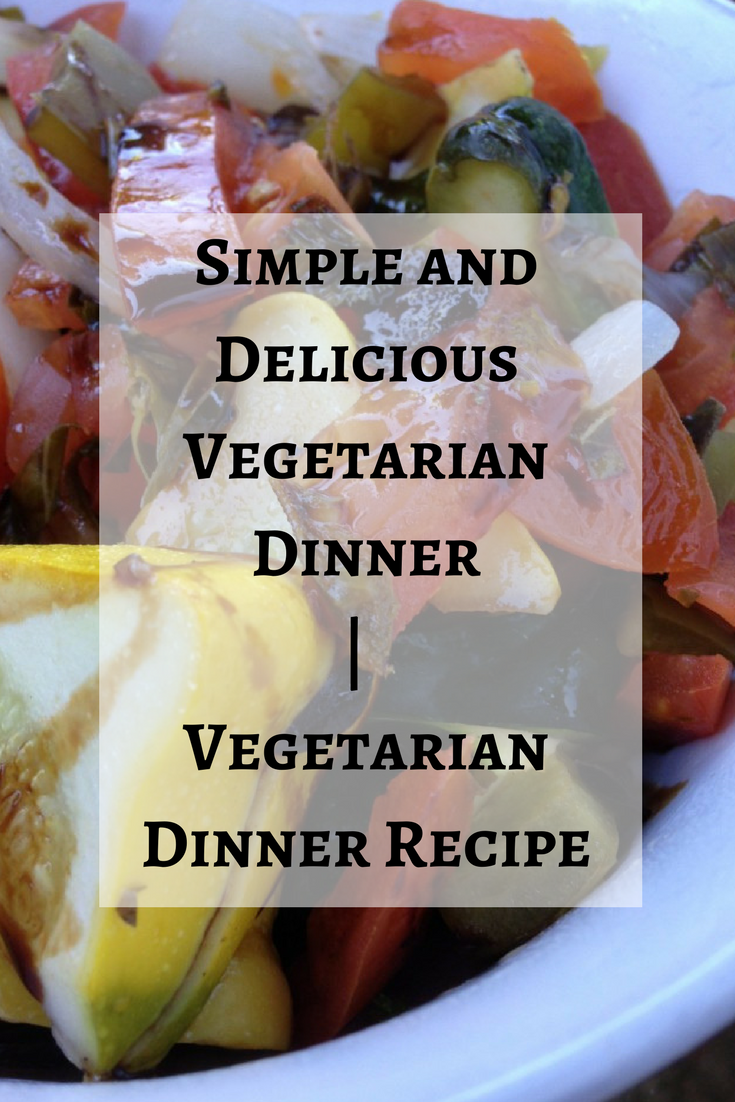
    If you’re looking for a meatless meal that satisfies, look no further. This simple and delicious vegetarian dinner isn’t exactly a recipe, but is meant to inspire you for your next veggie-only dish.

    vegetarian dinner

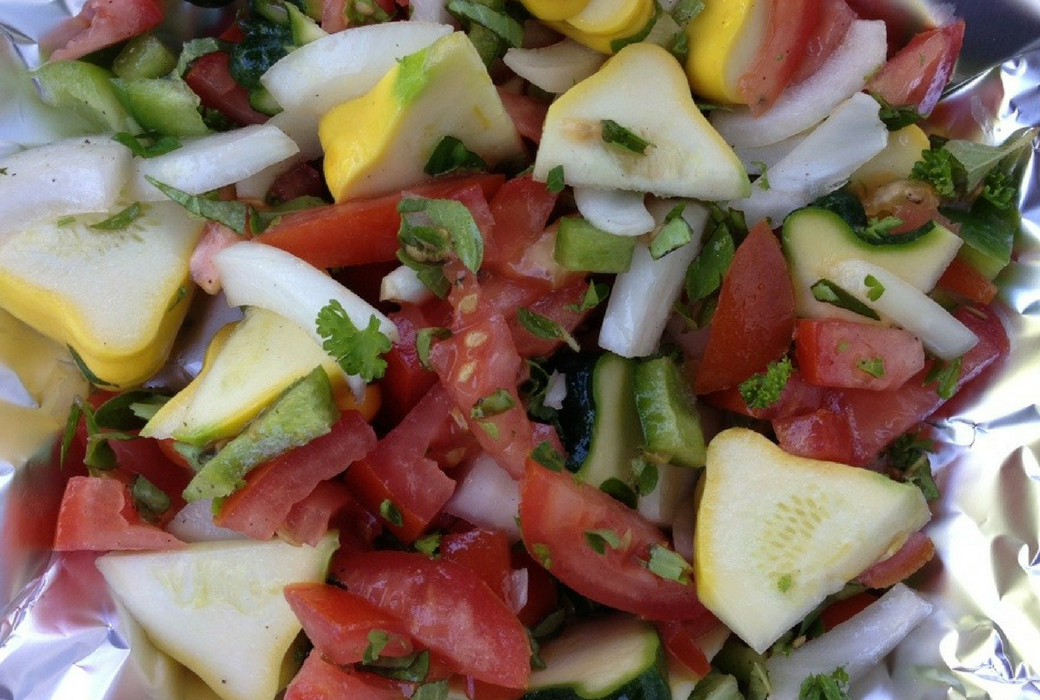
    All you do is preheat your oven to 350°F (177°C). Then chop up some veggies, herbs and toss them in some olive oil. In the  photo above, we have pattypans, peppers, onions and tomatoes.

    Pattypans?  From Wikipedia:

    Pattypan squash (or ‘patty pan’) is a variety of summer squash (Cucurbita pepo) notable for its small size, round and shallow shape, and scalloped edges, somewhat resembling a small toy top, or flying saucer. The name “pattypan” derives from “a pan for baking a patty”. Its French name, pâtisson, derives from a Provençal word for a cake made in a scalloped mould. The pattypan squash is also known as scallop squash, peter pan squash, sunburst squash, granny squash, custard marrow, custard squash, ciblème in Cajun French, white squash, button squash, scallopini, or simply “squash” in Australian English, or schwoughksie squash (pronounced “shwooxie squash”), especially if grown in the Poughkeepsie, New York, area.

    Patty pan squash comes in yellow, green, and white varieties.  The squash is most tender when relatively immature; it is generally served when it is no more than two to three inches in diameter. In fine cuisine, its tender flesh is sometimes scooped out and mixed with flavorings, such as garlic, prior to reinsertion; the scooped-out husk of a patty pan also is sometimes used as a decorative container for other foods. Pattypan is a good source of magnesium, niacin, and vitamins A and C.  One cup contains approximately 20 to 30 calories and no fat. It is often sliced, baked, or coated and fried until golden brown, or simply boiled. In Polish cuisine, they are pickled in sweet vinegar.

    They can be stored in a fridge for up to 3 days.

    You don’t exactly need pattypans for this vegetarian dish.  Almost any variant from the squash family will do.  Zucchini is a good alternative.  Add some fresh herbs like basil, parsley and oregano or whatever you like. Mushrooms, eggplant, garlic and plenty of other veggies also work well.

    Mix all your ingredients and wrap everything in foil on a baking dish. Bake at 350°F (177°C) for about 40 minutes or so. Drizzle with your favorite balsamic reduction and serve over rice, quinoa or just have it by itself.

    Voila!  You now have a simple and delicious vegetarian dinner!

    vegetarian dinner

    Other recipes are HERE.

  • Chopsuey

    Follow my blog with Bloglovin

    A Filipino favorite. Chopsuey or Chop Suey is a dish made-up of meat (chicken, pork, shrimp or fish) cooked quickly with different kinds of vegetables. Chopsuey is considered to be of Chinese origin but there are claims that Chopsuey was invented by Chinese immigrants in America.  There are many accounts on how chopsuey originated.  Check-out this Wikipedia article on Chopsuey.

    chopsuey

    Filipino Chopsuey is usually composed of the following vegetables:  cauliflower, sayote, bell peppers and snow peas.  Common meat are pork, chicken, beef, chicken or pork liver, and squid balls.

    Chopsuey

    INGREDIENTS:

    • 2 tablespoons vegetable cooking oil
    • 4 cloves garlic, minced
    • 1 cup onion, diced
    • 1 medium sized white onion, chopped
    • 1/4 kilo pork, sliced thinly
    • 1/4 kilo pork liver, sliced thinly
    • 1 cup green bell pepper, sliced
    • 1 cup red bell pepper, sliced
    • 1 cup carrot, sliced
    • 1 piece baguio pechay, sliced
    • 1 piece cabbage, sliced
    • 1 can Jolly Young Corn Cuts
    • 1 1/2 cup snow peas (sitsaro)
    • 12 pcs quail eggs, hardboiled
    • 1 table spoon oyster sauce
    • 1 table spoon soy sauce
    • 1 1/4 cup water
    • 1 teaspoon cornstarch
    • salt
    • pepper

    INSTRUCTIONS:

    1. Saute the onion and garlic in a preheated pan with cooking oil.
    2. Stir in the pork and liver.  Cook for 15 minutes.
    3. Add the green pepper, red bell pepper, corn and carrots.  Cook for a few minutes.
    4. Add the cabbage, Baguio pechay, white onion and snow peas.
    5. Stir in the oyster sauce and soy sauce and simmer for 2 minutes. Season with salt and pepper.
    6. Dilute the cornstarch in ¼ cup of water then pour mixture in the pot. Mix well and simmer for a few minutes.
    7. Add the quail eggs.
    8. Serve.

    chopsuey

    Chopsuey

    A Filipino favorite.  Chopsuey is composed of mixed vegetables and meat (in this case pork slices and pork liver.

    • 2 tbsp vegetable cooking oil
    • 4 cloves garlic (minced)
    • 1 cup onion (diced)
    • 1 pc white onion (medium sized, chopped)
    • 1/4 kilo pork (sliced thinly)
    • 1/4 kilo pork liver (sliced thinly)
    • 1 cup green bell pepper (sliced)
    • 1 cup red bell pepper (sliced )
    • 1 cup carrot (sliced)
    • 1 pc Baguio pechay (sliced)
    • 1 pc cabbage (sliced)
    • 1 can Jolly Young Corn Cuts (drained)
    • 1 1/2 cup snow peas (sitsaro)
    • 12 pcs quail eggs (hardboiled)
    • 1 tbsp oyster sauce
    • 1 tbsp soy sauce
    • 1 1/4 cup water
    • 1 tsp cornstarch
    • salt (to taste)
    • pepper (to taste)
    1. Saute the onion and garlic in a preheated pan with cooking oil.

    2. Stir in the pork and liver. Cook for 15 minutes.

    3. Add the green pepper, red bell pepper, corn and carrots. Cook for a few minutes.

    4. Add the cabbage, Baguio pechay, white onion and snow peas.

    5. Stir in the oyster sauce and soy sauce and simmer for 2 minutes. Season with salt and pepper.

    6. Dilute the cornstarch in ¼ cup of water then pour mixture in the pot. Mix well and simmer for a few minutes.

    7. Add the quail eggs.

    8. Serve.

    Other recipes are HERE.

  • Buttered Steamed Vegetables

    Buttered Steamed Vegetables

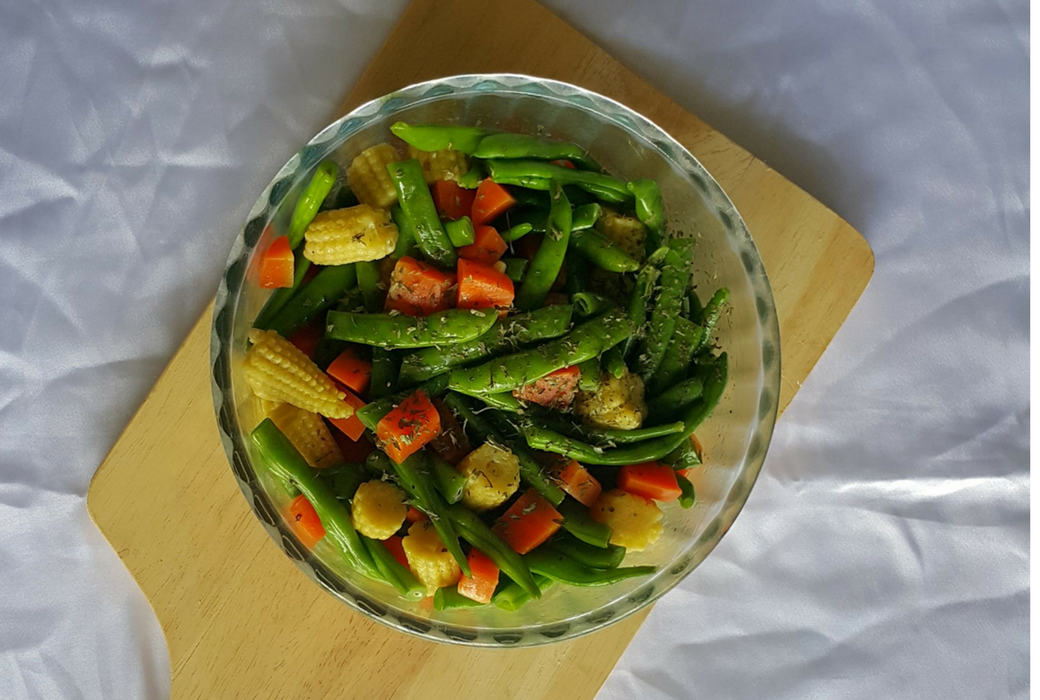
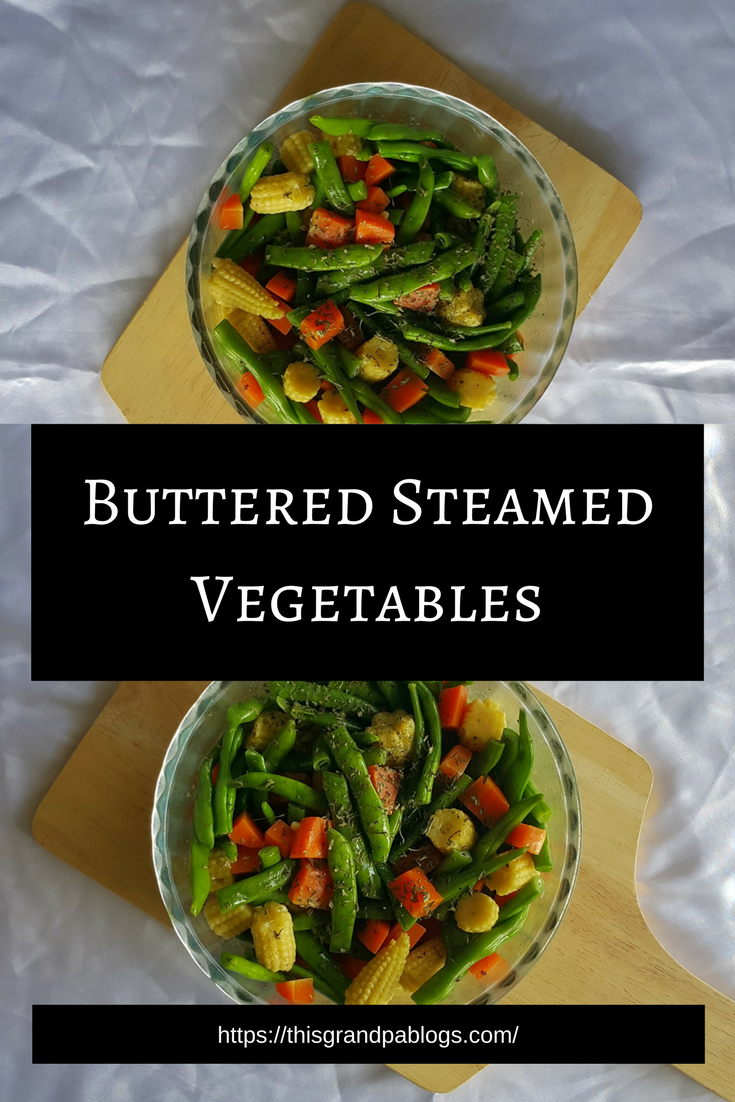
    Buttered Steamed Vegetables is a companion dish to the Beef Salpicao that I cooked.  Nothing fancy here and is very easy to prepare.

    buttered steamed vegetables

    The only thing that comes to mind here when steaming vegetables is diet food that it is boring and bland. Alright it is a very simple dish but would you call it boring? Definitely not. Steaming is one of the speediest and easiest cooking methods for vegetables.  It is an excellent way to bring out the true flavor of just about any vegetable. Cooked properly, steamed vegetables are loaded with numerous nutrients.  Adding butter to steamed vegetables is a classic, quick and easy way to prepare them, and you can serve just about any vegetable as a buttered dish. For this buttered steamed vegetables, I only cooked what I had available at home.  I had carrots, green beans and a can of young corn.  But you can use other vegetables for steaming like baby artichokes, asparagus, cauliflower, broccoli, brussels sprouts, baby or fingerling potatoes and sugar snap peas.  Go ahead and try this recipe!

    Ingredients

    • 1 piece large carrot, diced
    • 1 can young corn
    • 1 bunch green beans
    • 1 tbsp butter
    • salt and pepper to taste
    • 1 pinch parsley flakes (optional)

    Instructions

    1. In a steamer (I used a pot and an aluminum collander), boil water.
    2. Once water starts to boil, add diced carrots.  Steam for 5 minutes.
    3. Add young corn, steam for 2 minutes.
    4. Add green beans, steam for another 3 minutes.
    5. Remove vegetables from steamer and put in a mixing bowl.
    6. Add butter and mix.
    7. Season with salt and pepper.
    8. Sprinkle with parsley flakes (optional).
    9. Serve.

    buttered steamed vegetables

    Buttered Steam Vegetables

    Steamed vegetables with the addition of butter is a classic, quick and easy dish to prepare.

    • 1 piece large carrot (diced)
    • 1 can young corn
    • 1 bunch green beans
    • 1 tbsp butter
    • salt and pepper (to taste)
    • 1 pinch parsley flakes (optional)
    1. In a steamer (I used a pot and an aluminum collander), boil water.

    2. Once water starts to boil, add diced carrots.  Steam for 5 minutes.

    3. Add young corn, steam for 2 minutes.

    4. Add green beans, steam for another 3 minutes.

    5. Remove vegetables from steamer and put in a mixing bowl.

    6. Add butter and mix.

    7. Season with salt and pepper.

    8. Sprinkle with parsley flakes (optional).

    9. Serve.

    Check out other recipes HERE.

  • How To Cook Pochero

    How To Cook Pochero

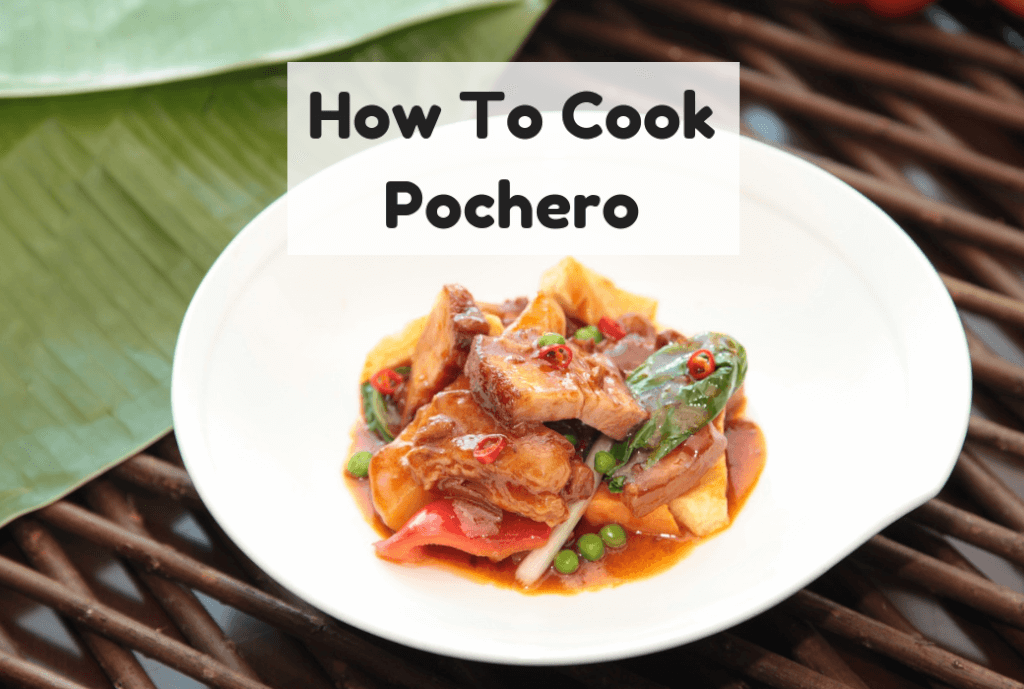
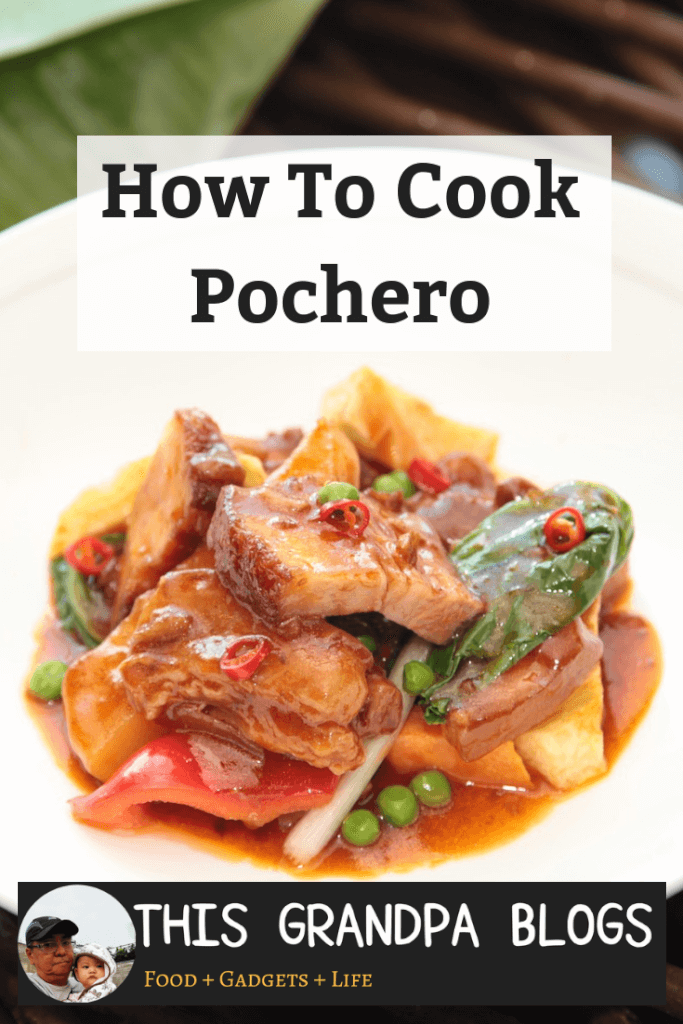
    How to cook Pochero? Pochero is a Filipino stew dish that was inherited from the Spanish. In Spain, they call it Puchero and is also prepared in Mexico and other South American countries.  Pochero consequently reached the Philippines during the Spanish colonial period of our history.  The Spanish word puchero means stewpot in English.  Pochero is almost the same as the Spanish dish called cocido but does not use colorants like paprika.

    [wprm-recipe-jump]

    Pochero is a stew of meat, vegetable, root crops and legumes.  In Andalusia, Spain, they considered this as peasant stew in the old times. This is because the meat usually used were from the cheapest cuts of pork, beef and chicken.   The vegetables often used where whatever was in season.  It certainly is not a peasant stew anymore!

    How To Cook Pochero

    What makes the Filipino Pochero different in contrast to the Spanish Cocido?

    Unlike in Spain, the Filipino Pochero is different because it uses tomato sauce rather than paprika.  But what sets it apart from other tomato-based stews?  It is because ripe plantain banana or ‘saba’ is a must.  Without a plantain, it it is not a pochero.  First of all, the plantain adds a natural sweetness to the dish. Secondly, plantain helps in producing the interesting flavor of the stew. Thirdly, Filipinos probably added plantain in pochero because it is very common in the Philippines and is easily available.  The plantain therefore makers pochero a uniquely Filipino dish.

    The meat usually used in pochero is beef.  Likewise, pork and chicken are ok to use too.  Similarly, some people combine the meats but I would rather use only one kind.  I remember my Uncle Jinggoy and his beef pochero.  He usually boils the beef first and sets aside the broth to make a soup out of it. Then he adds some of the vegetables like cabbage and green beans.  He then serves the dish with an eggplant relish that has vinegar and loads of garlic in it!

    How to cook pochero?  Simple!  Just ry this simple pochero recipe and I am almost sure your family will love this!  It is certainly an easy pochero recipe and above all tastes so good!

    [adinserter block=”10″]

    How To Cook Pochero

    Ingredients:

    • 1/2 kilo meat cubed (chicken, beef, or pork)
    • 1 bunch bok choy (pechay)
    • 1 small cabbage, quartered
    • 1 large plantain (saba) banana (ripe), chopped
    • 100 grams long green beans
    • 1 medium sized potato, cubed (sweet potato optional)
    • 2 medium tomatoes, diced.  You can also use canned tomatoes like THIS.
    • 1 medium onion, diced
    • 1 teaspoon garlic, minced
    • 1 tablespoon whole pepper corn
    • 2 tablespoons cooking oil
    • 1 small can tomato sauce
    • 1 cup chick peas (garbanzos)
    • 1 cup water
    • 1 chicken cube
    • Salt and Pepper to taste
    • Sugar to taste

    Instructions:

    1. Heat cooking oil in a cooking pot.
    2. Sauté garlic, onions, and tomatoes.
    3. Add meat and cook until the color turns light brown.
    4. Add-in chicken cube, whole pepper corn, and tomato sauce. Stir.
    5. Add water and let boil. Simmer until meat is tender (about 30 to 40 minutes).
    6. In a separate frying pan, fry potatoes and saba until golden light brown. Set aside.
    7. Add-in potato, saba, and chick peas. Cook for 5 to 7 minutes.
    8. Add cabbage and long green beans. Cook for 5 minutes.
    9. Stir-in the bok choy. Cover the pot and turn off the heat.
    10. Let the residual heat cook the bok choy (about 5 minutes).
    11. Season with salt, pepper and sugar according to desired taste.
    12. Transfer to a serving plate and serve with rice, eat the Filipino way and enjoy!


    How To Cook Pochero


    Pochero

    Pochero is a Filipino stew dish that was inherited from the Spanish. It is called Puchero in Spain and is also prepared in Mexico and other South American countries.

    • 1/2 kilo meat (cubed (chicken, beef, or pork))
    • 2 pcs medium tomatoes (diced)
    • 1 pc medium onion (diced)
    • 1 tsp garlic (minced)
    • 1 tbsp whole pepper corn
    • 1 small can tomato sauce
    • 1 cup chick peas (garbanzos)
    • 1 pc plantain banana (ripe) (large , chopped)
    • 1 pc potato (medium sized, cubed (sweet potato optional))
    • 1 pc cabbage (small, quartered)
    • 100 grams long green beans
    • 1 bunch bok choy (pechay)
    • 1 cup water
    • 2 tbsp cooking oil
    • 1 pc chicken cube
    • Salt and Pepper to taste
    • Sugar to taste
    1. Heat cooking oil in a cooking pot

    2. Sauté garlic, onions, and tomatoes.

    3. Add meat and cook until the color turns light brown.

    4. Add-in chicken cube, whole pepper corn, and tomato sauce. Stir.

    5. Add water and let boil. Simmer until meat is tender (about 30 to 40 minutes).

    6. In a separate frying pan, fry potatoes and saba until golden light brown. Set aside.

    7. Add-in potato, saba, and chick peas. Cook for 5 to 7 minutes.

    8. Add cabbage and long green beans. Cook for 5 minutes.

    9. Stir-in the bok choy. Cover the pot and turn off the heat.

    10. Let the residual heat cook the bok choy (about 5 minutes).

    11. Season with salt, pepper and sugar according to desired taste.

    12. Transfer to a serving plate and serve with rice, eat the Filipino way and enjoy!

    Other recipes may be found HERE.